How to Choose Wedding Photographer: Your Complete Guide
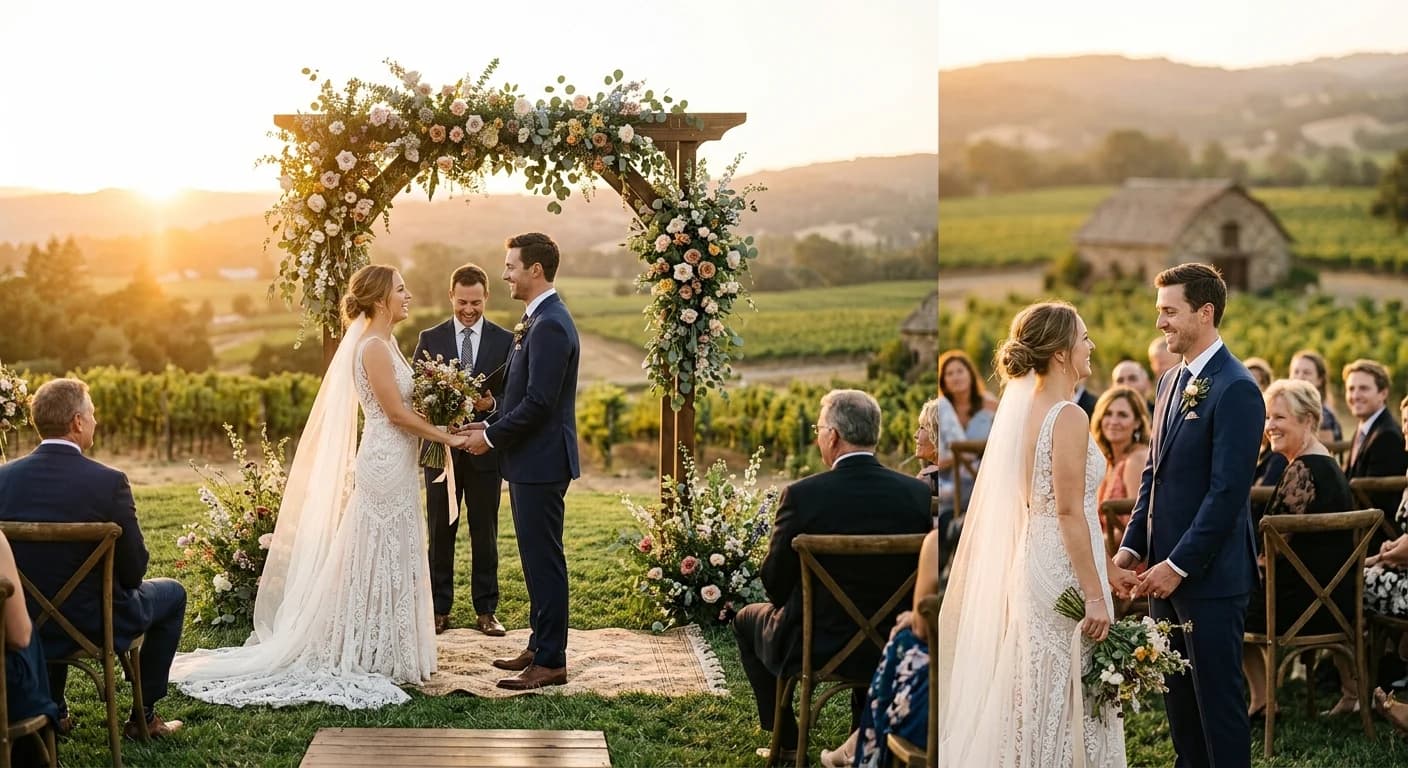
Before you even think about looking at a single portfolio, you need to sit down with your partner and get on the same page. It’s easy to get swept up in gorgeous Instagram feeds and lose track of what you actually want. Finding the right wedding photographer is about finding a professional whose art matches your vision, whose price tag fits your budget, and whose personality makes you both feel completely at ease.
It all starts by defining your priorities first. This groundwork is what separates a frustrating, endless search from a focused mission to find the perfect person to capture your day.
Defining Your Vision Before You Search
Before you fall for a specific photographer’s style, the most important step is to look inward. A focused search begins with a clear, shared vision you create with your partner. This is all about alignment—setting the foundation for a successful hunt.
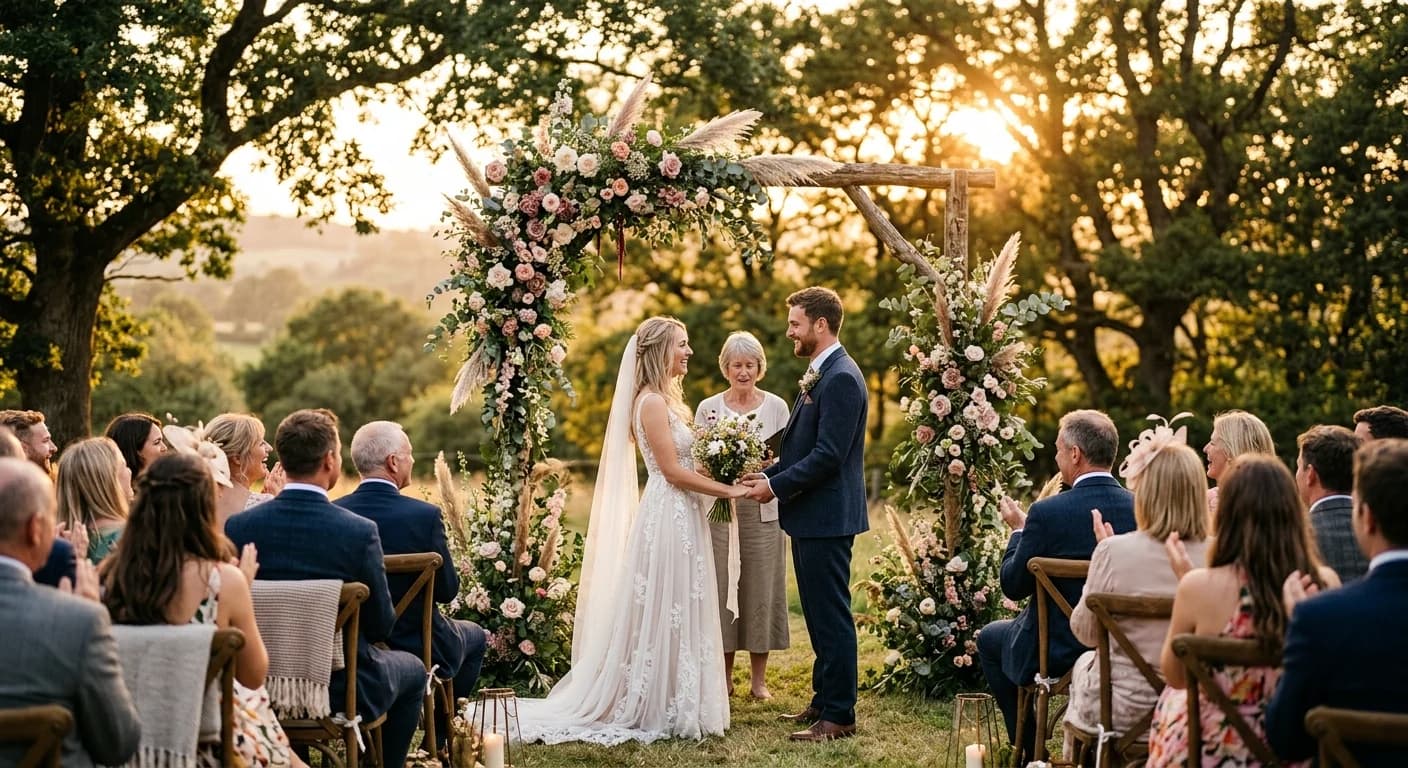
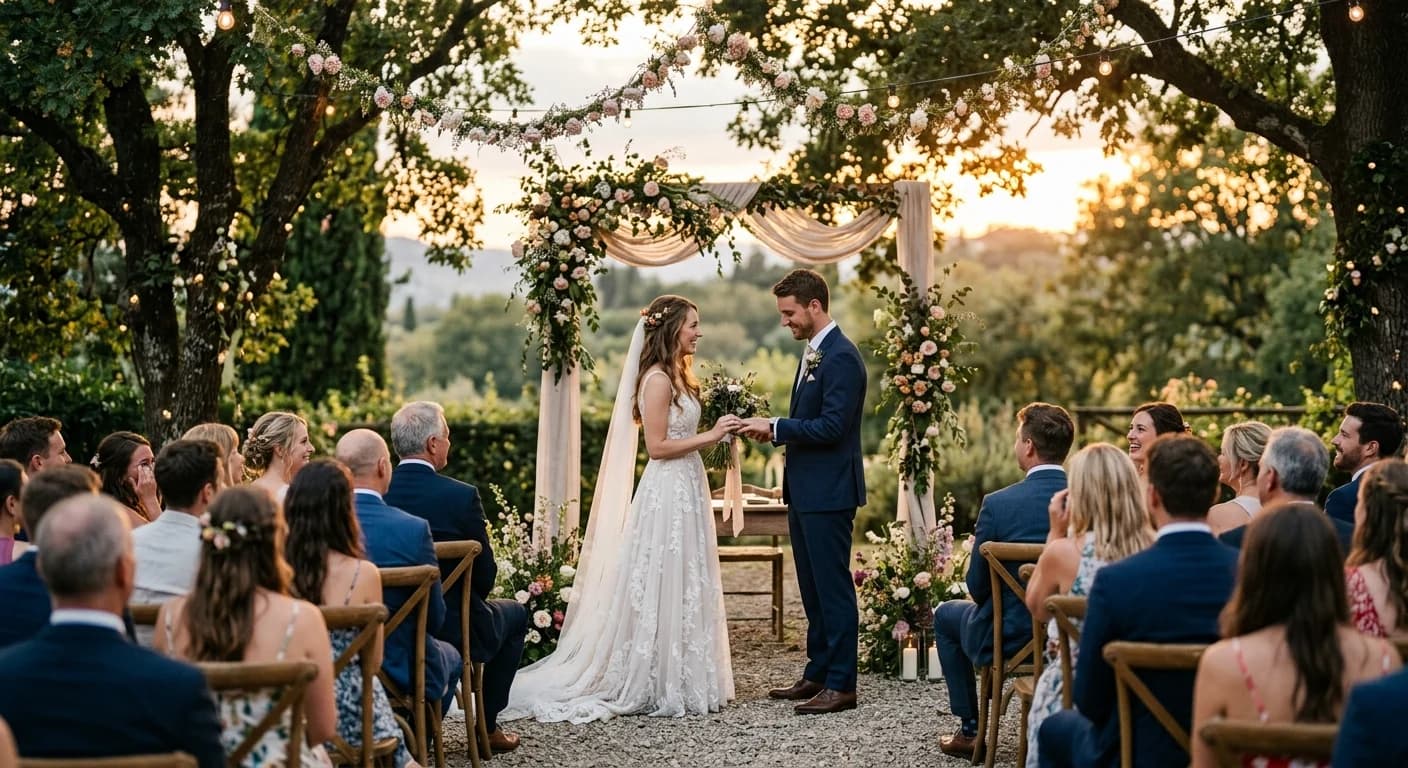
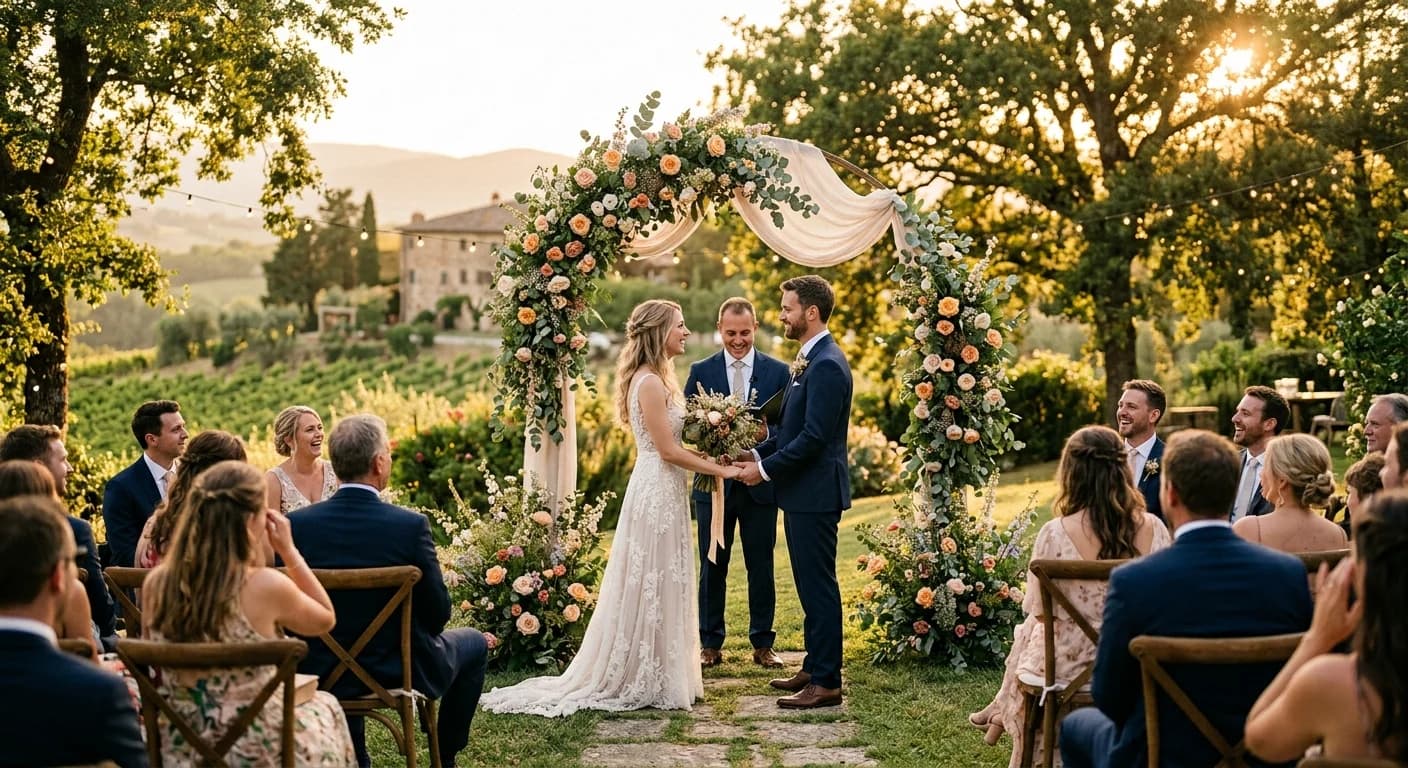
Start by talking about the overall vibe of your wedding day. Are you envisioning a classic, black-tie affair? A laid-back bohemian party? Or maybe a modern, minimalist celebration? Your wedding's aesthetic is the compass that will point you toward the right photographer.
Clarify Your Photography Priorities
Next, have a frank conversation about which photos will mean the most to you years from now.
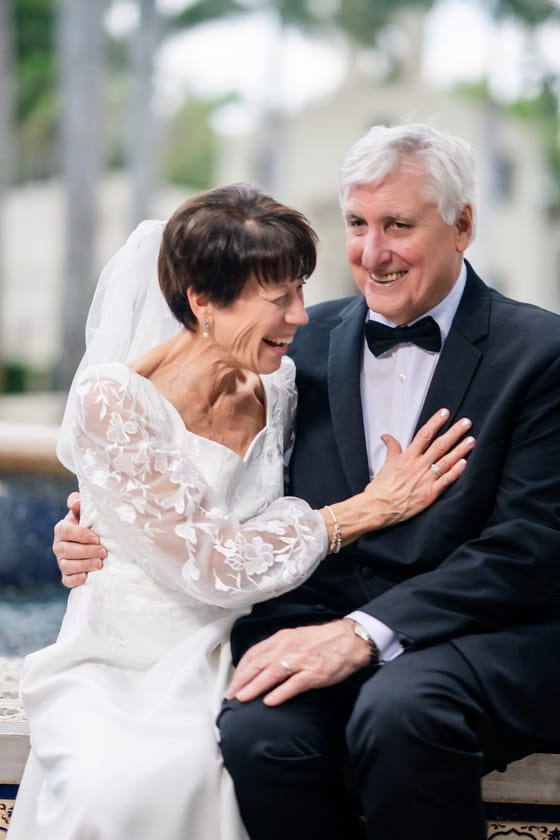
Do you dream of those epic, magazine-worthy portraits with a stunning backdrop? Or do you care more about the candid, unscripted moments—a tearful glance during the vows, a huge belly laugh during a toast, the quiet interactions your guests share?
There's no wrong answer, but you need to know what you prefer. A photographer who’s a master of photojournalism might not be the best choice if you have your heart set on perfectly styled, fine-art portraits. To dig deeper into the different approaches, you can learn more about finding the right style of wedding photography in our detailed guide.
This infographic breaks down the essential steps for building that initial vision, from gathering inspiration to finalizing what matters most.
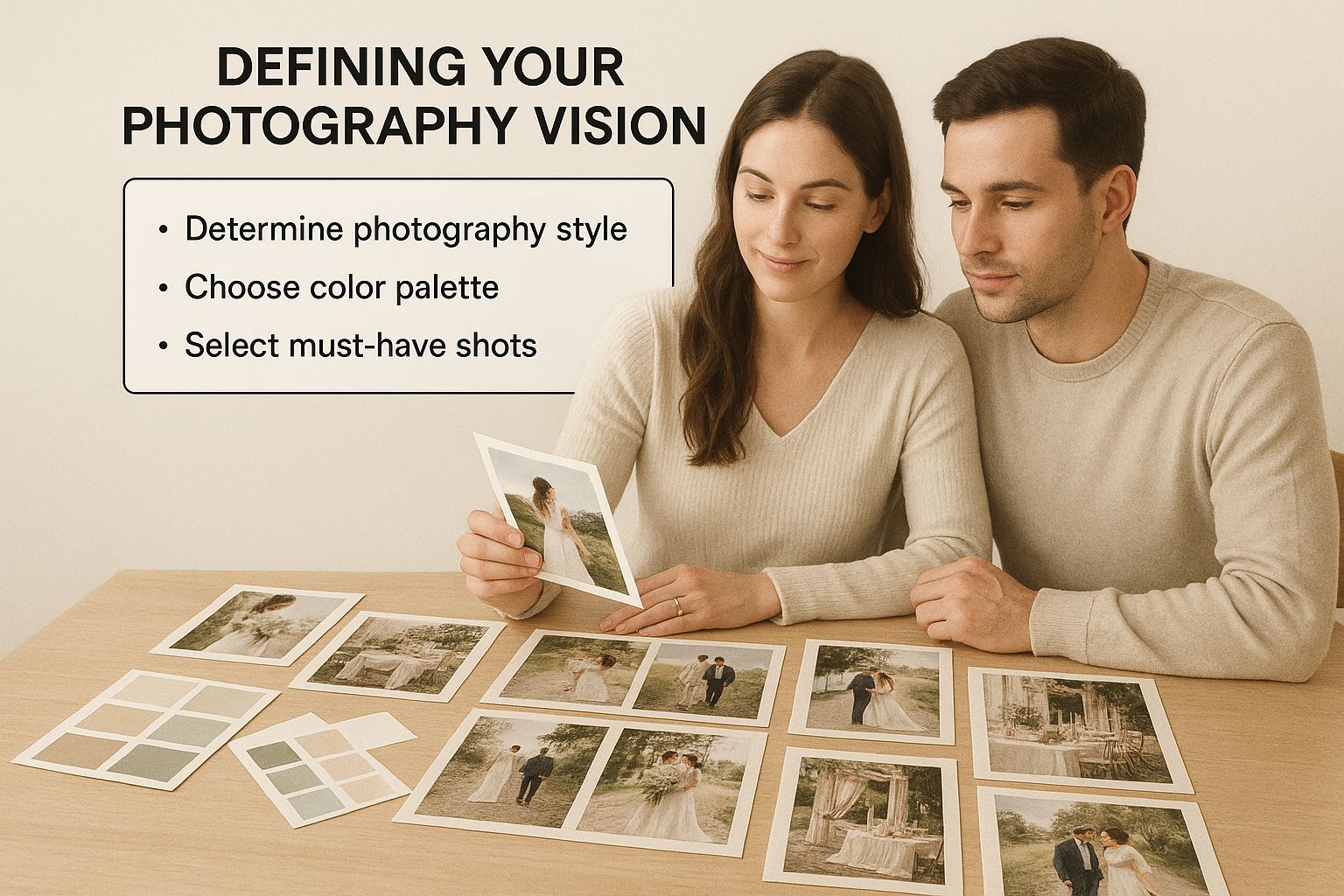
As you can see, a clear roadmap built from the very beginning makes the entire process so much smoother and more intentional.
Set a Realistic Budget
Finally, it's time to talk numbers. Wedding photography is a serious business, and demand keeps growing as more couples prioritize high-quality, professional photos of their day.
With a dizzying number of options out there, a clear budget is your most powerful tool for narrowing the field.
Before you start your research, use the checklist below to align on the big three: style, budget, and personality.
Your Foundational Decision Checklist
Use this table to align with your partner on the three core pillars before you start contacting wedding photographers.
Decision Factor
Key Questions to Ask Yourselves
Why It Matters for Your Search
Photography Style
Do we love light & airy, dark & moody, or true-to-life colors? Do we prefer candid, photojournalistic shots or more posed, traditional portraits?
This immediately narrows your search to artists whose aesthetic matches your wedding's vibe. You won't waste time looking at portfolios that don't fit.
Financial Investment
What's the absolute maximum we're comfortable spending? What percentage of our total wedding budget can we allocate to photography?
Knowing your number helps you filter out photographers who are out of range from the start, saving everyone time and avoiding disappointment.
Photographer Vibe
Do we want someone who is a quiet observer or someone who can direct a crowd? How important is it that we "click" with their personality?
This person will be with you all day. A good personality fit ensures you'll feel comfortable and relaxed, which always leads to better photos.
Getting these answers down on paper turns a vague idea into a concrete plan, making your search far more effective.
The amount you invest will directly influence the photographer’s experience, the hours of coverage they provide, and the final products you'll receive, like albums or prints. Be honest about what you can afford, but remember that you're investing in the one vendor responsible for the memories that will last a lifetime.
Cracking the Code on Photography Styles
Every single photographer has an artistic fingerprint, a unique way they see and capture the world. Picking the right one for your wedding isn't just about hiring someone with a good camera—it's about finding an artist whose vision matches how you want to remember your biggest day. Figuring out their style is the first, most crucial step to getting a gallery of photos you'll absolutely love for a lifetime.
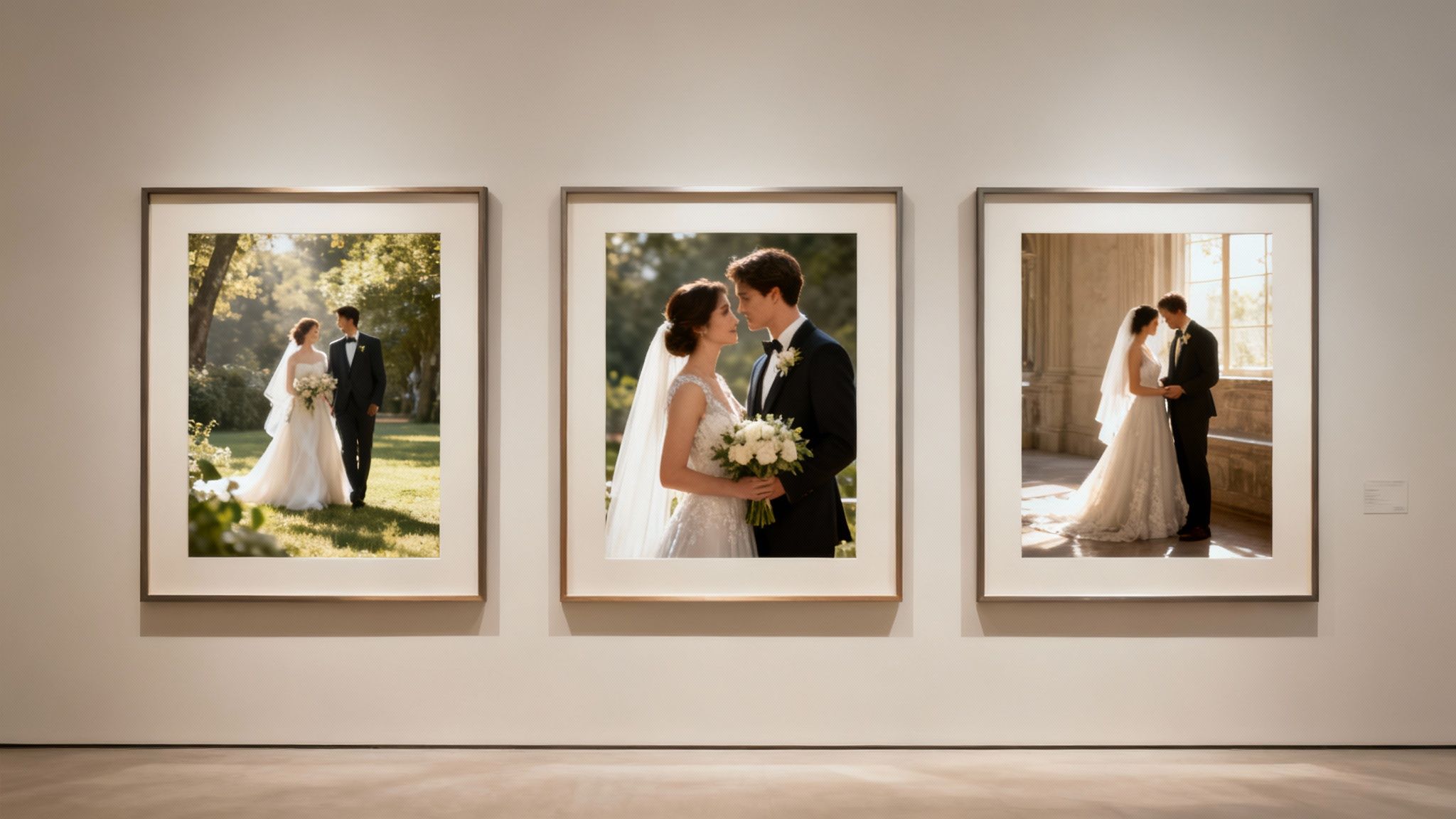
Think about it this way. Two painters can look at the exact same landscape, but one might create a soft, dreamy watercolor while the other produces a bold, dramatic oil painting. Both are stunning, but they make you feel completely different things. It’s the same with wedding photographers.
The Most Common Photography Approaches
While most photographers mix and match techniques, their portfolio will almost always lean heavily into one primary style. Knowing which one speaks to you is a massive shortcut in your search.
-
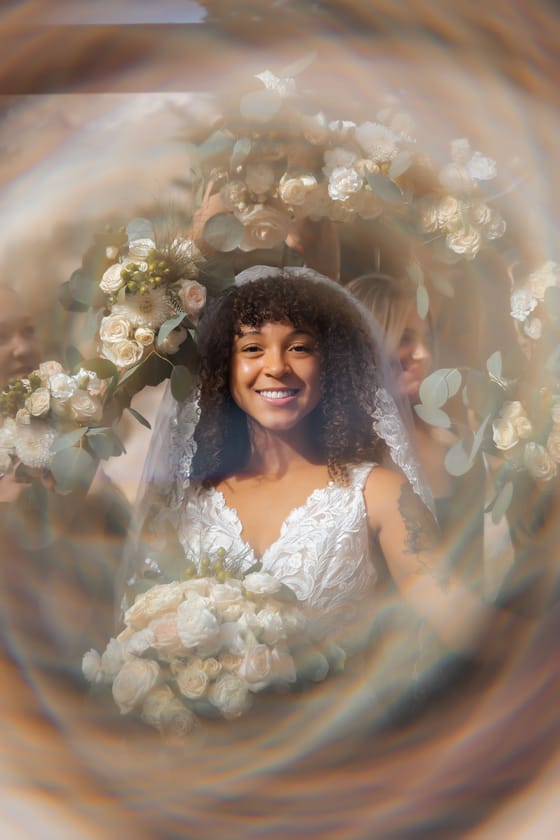
Fine Art Photography: This style is all about romance. The photos are often soft, bright, and airy. The goal is to create beautifully composed, almost painterly images. A fine art photographer will give you a lot of direction to get those perfectly ethereal shots.
-
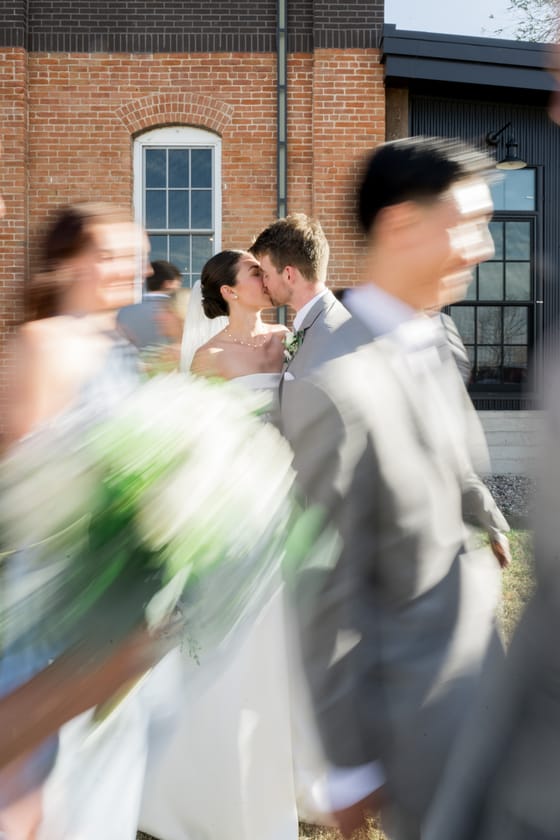
Photojournalistic Photography: You might also hear this called a documentary style. It's all about capturing the day exactly as it unfolds—no posing, no do-overs. The photographer is more of a quiet observer, telling your story through candid moments. If you care more about raw emotion than perfect poses, this is for you.
-
Cinematic or Dramatic Photography: This approach uses dramatic lighting and creative angles to create photos that feel epic and emotional, like a still from a movie. These photographers are masters of off-camera flash, using it to sculpt light and produce moody, high-impact images.
A photographer's portfolio is their highlight reel. Your job is to look deeper. Ask to see their full wedding galleries to understand their consistency and skill in managing the entire day—from the bright midday sun of your ceremony to the dark, tricky lighting of your reception.
How to Analyze a Portfolio Like a Pro
Once you’ve found a style that makes your heart sing, it’s time to really dig into a photographer's work. Don't just scroll through their perfectly curated Instagram feed. You need to ask to see at least two or three full wedding galleries from start to finish.
This is where you'll find the truth. Pay special attention to the reception photos. Are they sharp, clear, and well-lit, or are they a grainy, blurry mess? A true professional knows how to handle any lighting situation, natural or artificial. An amateur, on the other hand, often falls apart once the sun goes down.
Also, look for consistency in their editing. Does the look and feel of the photos stay the same from the getting-ready shots all the way to the last dance? A cohesive gallery shows they have a clear and confident artistic vision.
This deep dive is what separates a good choice from a great one. For example, if you know you want unscripted, candid moments, you'll need someone with a strong documentary approach. You can get a feel for what that looks like by exploring examples of photojournalistic wedding photography to see how they tell a complete story. Once you know what to look for, you can pick your photographer with total confidence.
Decoding Photography Costs and Packages
Let's talk money. Wedding photography pricing can feel all over the map, and it's easy to get sticker shock if you're not sure what you're looking at. The most important thing to understand is that you're not just hiring someone to click a button for a few hours. You're investing in their artistic eye, years of experience, and all the behind-the-scenes work that transforms a collection of digital files into your first family heirloom.
The biggest factor driving the price is almost always the number of hours they'll be with you on the wedding day. Some packages cover just the essentials—maybe the ceremony and portraits. Others offer full-day coverage, from the mimosas in the morning to the sparkler exit at night. Before you can compare prices, you need a rough sketch of your wedding day timeline to figure out how much coverage you actually need.
So, What’s Actually Included in the Price?
Once you have an idea of hours, it's time to dig into the details of what each photographer’s package really offers. It’s rarely just about their time on the day itself.
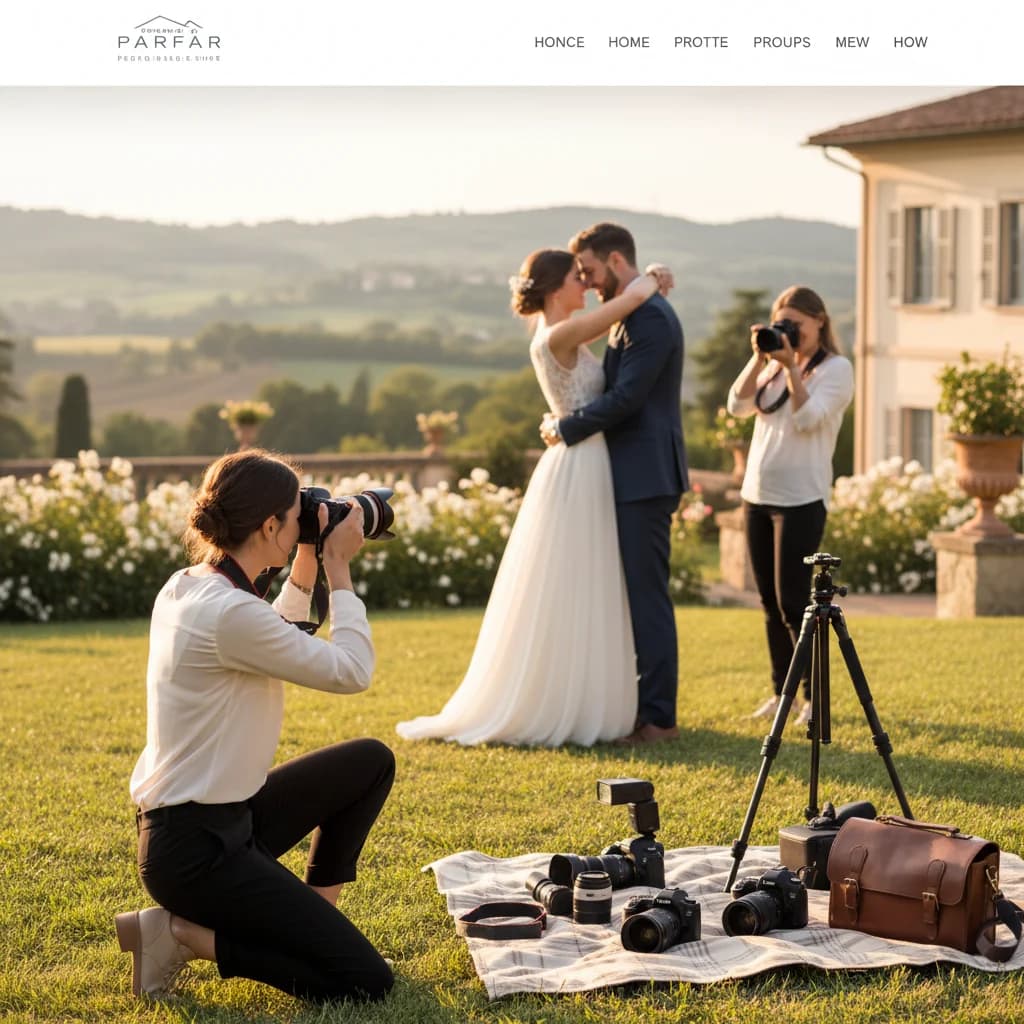
- A Second Photographer: I always recommend this for weddings with more than 100 guests. A second shooter is invaluable for capturing different perspectives simultaneously—think of getting your partner's reaction as you walk down the aisle while the main photographer focuses on you.
- An Engagement Session: This is more than just a freebie. It's your chance to get comfortable with your photographer (and in front of the camera!) before the high-stakes environment of the wedding day. It’s a game-changer for building rapport.
- Digital Files: Make sure the package includes a high-resolution online gallery with full personal printing rights. This is key. It means you can download, print, and share your photos freely without pesky watermarks.
- Travel Fees: Always clarify if travel costs are built-in, especially if your venue is a bit of a drive for them. You don't want any surprise mileage or accommodation fees later.
Breaking down these elements is a lot like planning other parts of your wedding. You'll find yourself making similar decisions when you start looking into wedding cake pricing and styles and trying to figure out what fits your vision and budget.
When you start getting quotes, don't just glance at the final number. I tell all my clients to create a simple spreadsheet to compare packages side-by-side. List the hours, number of photographers, deliverables like albums, and any other extras. This gives you a true "apples-to-apples" comparison and helps you see where the real value is.
It's also worth knowing what's happening in the industry right now. A recent State of the Photography Industry report found that while 65% to 77% of photographers are facing rising business costs, many are hesitant to raise their prices accordingly. This can create a situation where rock-bottom prices might signal a compromise in quality or experience.
Watch Out for Potential Hidden Costs
Finally, be your own best advocate and ask what isn't included. It’s better to know now than be surprised later.
Common add-ons or extra costs can include things like professional albums (which involve design time and printing), rush editing if you need your photos back ASAP, or overtime fees if your party goes later than planned. Asking these questions upfront is just smart planning.
For a really deep dive into budgeting, our wedding photographer pricing guide breaks everything down. By doing a little homework now, you can feel totally confident that you're choosing a photographer whose package gives you incredible value for one of your most important wedding investments.
Why a Personality Match Is Non-Negotiable
You’ve fallen in love with a photographer’s portfolio, and their packages seem to check all the right boxes. So, what’s next? It's time for what I consider the most crucial step: the personality fit.
Think about it. This person will be with you more than your maid of honor, more than your parents, and sometimes even more than your partner on your wedding day. They're a shadow, a guide, and a calming presence all rolled into one.
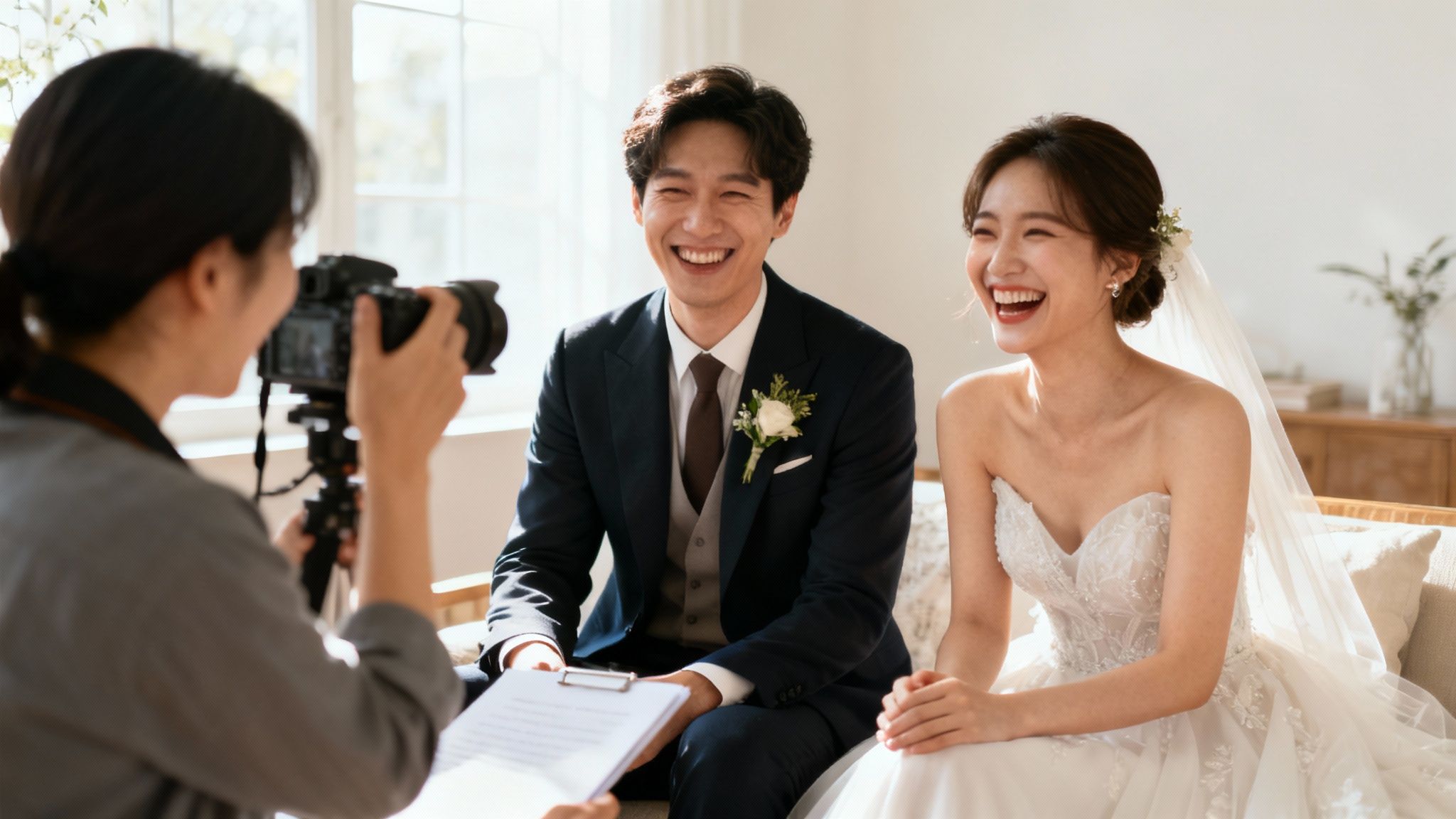
They'll be there for the quiet, teary-eyed moments while you're getting ready, and they'll be navigating all the different family personalities with a smile. If you feel tense or awkward around your photographer, it will absolutely show in the final images, no matter how technically brilliant they are.
The All-Important Vibe Check
This is where the initial meeting—whether it’s over Zoom or a local coffee shop—is so important. Consider it your official "vibe check." How do you feel while you're talking to them?
Are they genuinely interested in your story and excited about your plans? Or does it feel like you’re just another name on their calendar? You're looking for someone who feels less like a vendor and more like a trusted friend who happens to be amazing with a camera.
That connection is the secret sauce. It's what helps you let your guard down, laugh genuinely, and just be yourselves. Finding this rapport is a huge part of the process when you're searching for a photographer nearby who truly gets you.
Questions That Go Beyond the Portfolio
To get a real sense of who they are, you need to ask questions that go deeper than packages and timelines. Your goal is to understand how they operate on the wedding day itself.
Here are a few of my go-to questions to reveal their working style:
- How would you describe your energy on a wedding day? Are you more of a quiet observer, or do you step in to direct and organize people? This helps you picture them in the middle of your reception.
- Can you walk me through how you’d handle a situation where the timeline is running very late? You're looking for calm, confident problem-solving skills, not panic.
- What's your approach for making camera-shy couples feel comfortable? An experienced pro will have a whole toolkit of tricks to make you feel at ease.
Pay attention to how they answer, not just what they say. Are they confident? Flexible? Does their passion for their work shine through? If the answers sound canned or they brush off your concerns, that's a definite red flag.
The wedding photography world is a crowded space. Photographers who specialize in weddings make up only a slice of the entire industry, and many of them also shoot portraits and events to keep their businesses thriving. With so much talent out there, that personal connection often becomes the deciding factor. It's what separates a good photographer from your photographer.
Don’t Sign Anything Until You’ve Read the Contract
You found them! The photographer whose work you adore, who you clicked with instantly, and whose packages fit your budget. It feels like the search is over, but hold off on popping the champagne just yet. There's one final, incredibly important step: the contract.
Think of the contract as the blueprint for your entire photography experience. It’s not just a boring legal document; it’s a tool that protects both of you by getting every single detail down in writing. It lays out every expectation, every deliverable, and every "what-if" scenario so there are no awkward surprises later. Signing on the dotted line without reading every word is a gamble you just don't want to take.
The Make-or-Break Clauses
A pro’s contract will be detailed and specific, leaving no room for guesswork. Don’t just scan for your names and the final price. This is where you make sure everything you talked about on the phone or over coffee is officially documented.
Here’s exactly what to look for:
- Hours of Coverage: The contract needs to list the exact start and end times. If it just says “8 hours,” you need to ask for clarification. Does that clock start the second they arrive? Does their travel time between the hotel and the venue count? And what’s the overtime rate if the party goes a little longer than planned?
- Image Delivery Timeline: When will you actually get to see your photos? A professional standard is anywhere from 6 to 12 weeks, but this must be spelled out in the contract.
- What You Get and What You Can Do With It: Look for confirmation that you’ll receive high-resolution digital files. You also need a personal use license (sometimes called print rights). This is what legally allows you to download your photos, order prints, and share them on social media. The photographer almost always keeps the copyright, but the personal license gives you the freedom you need.
A vague contract is a huge red flag. If critical information like the delivery date, cancellation policy, or even a rough estimate of the final image count is missing, push for it to be added. Any true professional will be happy to provide a transparent and thorough agreement.
Planning for What Could Go Wrong
Let’s be honest, the "what-if" section of a contract is never fun to read, but it’s often the most important part. A solid agreement will have you covered even in a worst-case scenario, which is the ultimate peace of mind.
Make sure your contract includes clauses covering these situations:
- Cancellation & Postponement: Life happens. What’s the policy if you have to move your date or, in the worst case, cancel? What if the photographer has an emergency and has to back out? The terms for your retainer and any payments made should be completely clear.
- The Emergency Plan: This is non-negotiable. The contract must outline what happens if your photographer gets sick or has a legitimate emergency on your wedding day. Do they have a network of trusted photographers they can call on to cover for them? Will that replacement be of a similar style and caliber?
- Liability and Gear Failure: Check that the photographer has liability insurance—most venues require it anyway. The contract should also mention their plan for equipment failure. Every professional shooter will have backup cameras, lenses, and batteries on hand, ready to go at a moment's notice.
Taking 30 minutes to really dig into these details ensures you and your photographer are on the same page about everything. Once it’s all confirmed, you can sign with confidence, knowing your memories—and your investment—are in safe hands.
Frequently Asked Questions About Choosing a Photographer
Even with a solid plan, a few questions are bound to pop up as you get closer to making a final decision. That's completely normal—hiring your wedding photographer is a big deal with a lot of moving parts. Here are some of the most common questions we hear from couples, along with some straightforward advice.
How Far in Advance Should We Book Our Photographer?
The sweet spot for booking your photographer is generally 9 to 12 months before your wedding. If your date falls during peak season (think late spring through early fall) or on a popular Saturday, you’ll want to be on the earlier side of that window. The most in-demand photographers often get booked well over a year out.
Locking in your photographer early does more than just secure your date. It also freezes their current pricing, so you won't be surprised by any annual rate increases later on. But if you're working with a shorter engagement, don't worry! Plenty of amazing photographers might still be available. The trick is to start looking as soon as you’ve finalized your date and venue.
Is an Engagement Session Really Necessary?
We get this one a lot, and our answer is always a resounding yes. An engagement session is so much more than just a chance to get some nice photos for your save-the-dates or wedding website.
Consider it a trial run for the main event. It’s the perfect, low-pressure opportunity to get comfortable in front of the lens and, more importantly, to build a real connection with your photographer. This pre-wedding shoot almost always results in more natural, relaxed, and authentic photos on the wedding day because the ice has already been broken. Plus, your photographer gets to see how you two interact, learn your best angles, and figure out what makes you laugh. It’s an invaluable warm-up.
One area that often trips couples up is the difference between who owns the photos and what you’re allowed to do with them. Getting this straight before you sign on the dotted line is essential, as it dictates how you can use your images for years to come.
What's the Difference Between Print Rights and Copyright?
This is probably one of the most important things to understand in your photography contract.
When a photographer gives you "print rights" (often called a "personal use license"), they are granting you permission to download, print, and share your photos for any non-commercial reason. You can make albums, order canvases for your home, post them all over social media, and send them to your family.
The photographer, however, almost always retains the "copyright." This means they remain the legal owner of the images. This ownership gives them the right to use the photos for their own business—think website galleries, blog posts, and marketing materials. It also means you can't sell the images, edit them with filters, or submit them to a magazine without their written permission. Any professional contract will spell this out clearly. To make sure you cover all your bases, we put together a complete list of questions to ask your wedding photographer before you sign anything.
As you plan the details that make your day unique, you might also be thinking about other personal touches. For some inspiration beyond photography, check out these creative handmade wedding gift ideas.
At Candid Studios, we believe this process should feel exciting, not overwhelming. If you're looking for a team that values open communication and is passionate about capturing your story with genuine emotion, we’d love to chat. See our work and get in touch at Candid Studios.