Best Drones for Aerial Photography A Buyer's Guide
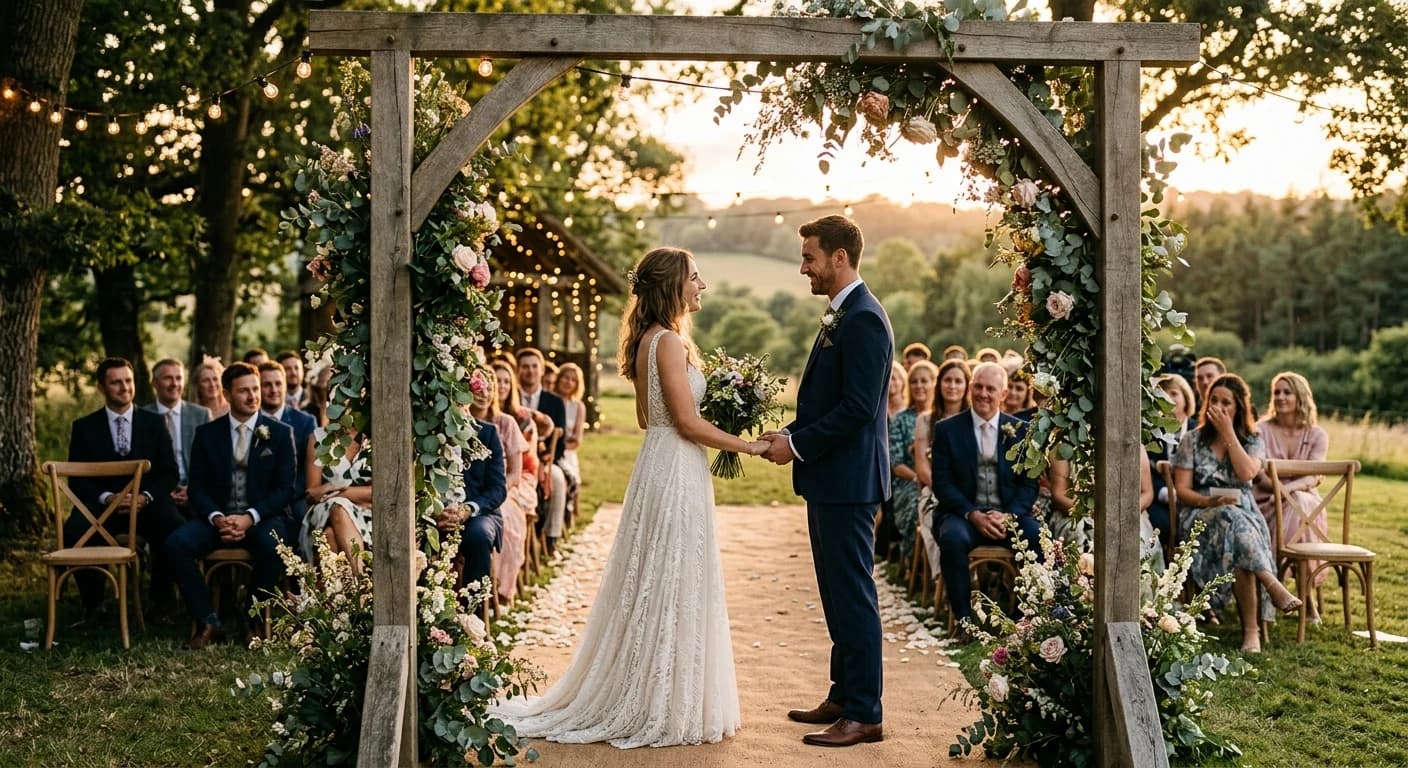
When people ask me for the best drone for aerial photography, I usually point them to three models: the DJI Mavic 3 Pro for its absolutely stunning image quality, the DJI Air 3 for its all-around incredible performance, and the DJI Mini 4 Pro if you need serious power in a small package. The right one for you really comes down to a trade-off between sensor size, how long it can stay in the air, and what your budget looks like.
Choosing Your Perfect Aerial Photography Drone
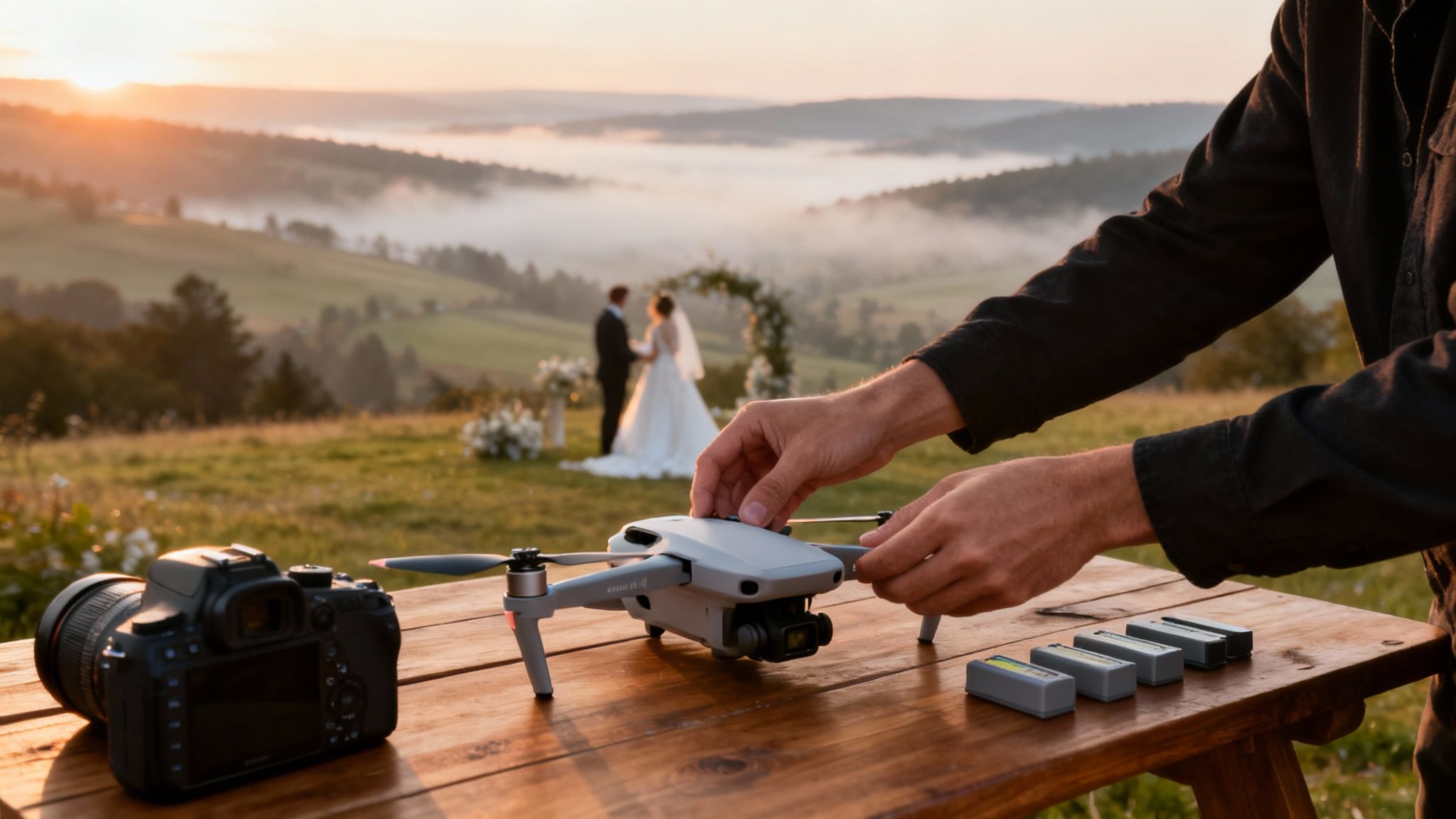
Picking the right drone is about more than just specs; it’s about transforming your visual storytelling. A great aerial shot can turn a standard wedding video into a cinematic masterpiece or give commercial footage that "wow" factor. But with so many options, the technical jargon can be overwhelming. This guide is designed to cut through that noise, giving you a clear, practical roadmap to finding the perfect drone for your professional or creative work.
Quick Look At Our Top Drone Picks
Before we get into the nitty-gritty, here's a quick overview of the drones we recommend most often. Think of this as the "at a glance" version. Each of these models shines in a different area, whether it's for high-end cinematic work or agile event photography.
Drone Model
Best For
Key Feature
Price Tier
DJI Mavic 3 Pro
Commercial & Cinema
Triple-Camera System
Premium
DJI Air 3
Weddings & Events
Dual-Camera Versatility
Mid-Range
DJI Mini 4 Pro
Travel & Beginners
Sub-250g Portability
Budget
Autel EVO Lite+
Low-Light Shooting
1-Inch Sensor & f/2.8 Aperture
Mid-Range
This table should give you a solid starting point. Now, let's explore why adding a drone to your toolkit is such a big deal in the first place.
Why Drone Photography Is a Game Changer
The power of a good aerial shot is hard to overstate. The drone market has absolutely exploded, especially in media and entertainment, making these tools a staple for any serious professional. The proof is in the results—real estate listings with drone photos, for example, have been shown to sell 68% faster. That single stat shows just how much value a different perspective can add, and it's a trend we see everywhere. You can find more details on the drone market growth at Unmanned Airspace.
Here at Candid Studios, having a drone in our kit means we can offer clients a viewpoint that used to require a helicopter and a Hollywood budget. It completely changes what's possible.
- Capture Stunning Establishing Shots: We can pull back to reveal a breathtaking wedding venue nestled in the mountains or a corporate campus in its urban setting.
- Create Dynamic Movement: The smooth, cinematic pans, tilts, and reveals you can get with a drone are impossible with a camera on the ground.
- Offer Unique Angles: A bird's-eye view of an outdoor ceremony or the layout of a massive estate provides context and scale you can't get any other way.
The true power of a drone isn't just flying; it's the ability to place a camera anywhere in three-dimensional space to tell a more powerful story.
Getting a handle on what is drone photography is the first step. This guide will walk you through the models and features that matter, so you can match the right technology to your creative vision and make a choice you feel confident about.
Decoding the Features That Really Matter
Before we jump into specific models, let's talk about what actually separates a serious aerial photography tool from a toy. The spec sheet isn't just a list of numbers; those figures directly translate to the quality of your images and the creative freedom you'll have on a shoot. Knowing what to look for means you'll invest in a drone that genuinely helps you produce better work.
Getting a handle on these concepts is just as crucial as nailing your camera settings on the ground. They're the foundation of your aerial toolkit. Speaking of which, for a look at how this all fits into your broader gear setup, our professional photography equipment checklist breaks down the essentials for land-based shoots.
Sensor Size and Image Quality
Let’s get straight to it: the single most important factor for stunning aerial images is the camera sensor size. It’s that simple. A larger sensor, like a 1-inch or a Micro Four Thirds (MFT), physically captures more light. That means cleaner images, incredible dynamic range, and far less noise when you’re shooting at the edges of the day.
Sure, the smaller 1/1.3-inch sensors you find in drones like the DJI Mini series are impressive for their size. But for professional work, the extra latitude a bigger sensor gives you in post-production is a game-changer. The difference is night and day when you need to pull details out of deep shadows or recover blown-out highlights without turning your image into a grainy mess.
Think of a drone's sensor as its eye. A bigger eye sees more clearly in the dark, capturing the subtle tones and vibrant colors that a smaller one would simply miss.
Gimbal Stabilization and Smooth Footage
The gimbal is that little motorized mount holding the camera. Its one job? To keep your shot perfectly steady by absorbing every bump, tilt, and gust of wind the drone encounters. The industry standard is a 3-axis gimbal, which stabilizes on the pitch, roll, and yaw axes. This is what creates that buttery-smooth, cinematic motion that clients expect.
Without a solid gimbal, even a slight breeze would ruin your footage, making it shaky and unprofessional. It’s what lets you fly dynamic, sweeping shots while your camera stays locked on the subject, delivering footage that feels intentional and polished. This is non-negotiable for everything from a slow reveal of a wedding venue to tracking a car for a commercial spot.
Flight Time and Operational Range
Creative shots don’t happen on a stopwatch. A drone’s flight time—how long it can stay airborne on one battery—directly impacts your ability to compose, wait for the right moment, and nail the shot without feeling rushed. Today’s pro-level drones offer flight times between 30 and 45 minutes, a huge leap from what we had just a few years ago.
A longer flight time means less stress. You can wait for that perfect cloud to pass, run multiple takes of a complex maneuver, or cover a huge property without constantly landing to swap batteries. Paired with a robust transmission system, like DJI’s OcuSync, you also get a crystal-clear video feed over long distances. This combination of endurance and reliable control gives you the confidence to fly further and think bigger, which is where real creativity begins.
Comparing the Top Drones for Professional Imaging
Choosing the right drone for aerial photography goes way beyond a simple spec sheet. It's about understanding how a machine performs in the real world—how its features translate into tangible results when you're on a professional shoot. This is a head-to-head look at the top contenders, focusing on capability, versatility, and practical value for your projects.
The goal here isn’t to crown a single “winner.” It’s to help you pick the right tool for the job. The best drone for a high-stakes commercial project might not be the best one for a fast-paced wedding or a creative portrait session. We’ll dig into the nuanced differences that really matter when the quality of your final product is on the line.
The chart below highlights the essentials: a high-quality sensor, rock-solid gimbal stabilization, and a flight time that won’t leave you hanging. These are the pillars of any professional aerial camera platform.
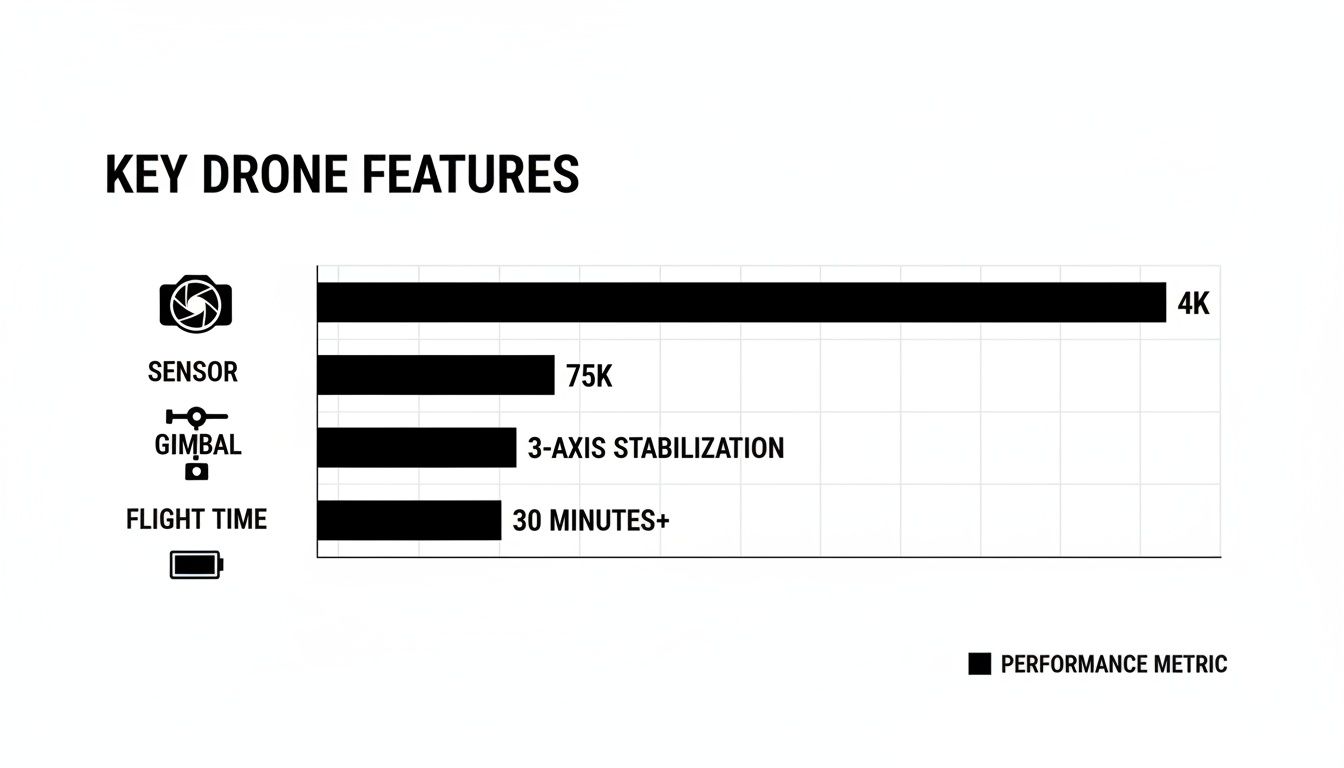
This just goes to show that superior imaging is always the result of a well-balanced system, not just one impressive number.
The Professional Powerhouse: DJI Mavic 3 Pro
When professionals need maximum versatility and absolutely uncompromising image quality, the DJI Mavic 3 Pro is the undisputed champion. Its defining feature is a truly groundbreaking triple-camera system, anchored by a massive Micro Four Thirds (MFT) sensor on its main wide-angle lens. This isn't just a minor update; it fundamentally changes what a foldable drone can do.
For a commercial real estate shoot, this system is a dream. You can capture a sweeping, cinematic shot of a property with the main camera, then instantly switch to the 3x medium telephoto lens to highlight a grand entrance or landscaped garden. The 7x telephoto lens adds even more creative compression, letting you isolate distant features without losing an ounce of quality.
The Mavic 3 Pro’s triple-lens setup isn’t just about having more focal lengths; it's about giving you the power to tell a more complex visual story from a single position in the sky.
This drone really proves its worth in high-stakes environments where you need flexibility in post-production. It records in 10-bit D-Log M, capturing over a billion colors and providing incredible latitude for color grading. For our video team, this means the aerial footage integrates seamlessly with shots from our high-end ground cameras. (If you're curious about what we use on the ground, check out our guide on the best cameras for video production).
Of course, all that power comes with a premium price tag and a bit more weight, making it a considered investment for specialized work rather than your everyday event coverage.
The All-Round Performer: DJI Air 3
The DJI Air 3 hits that sweet spot between performance, portability, and price. It’s our top recommendation for wedding and event photographers for good reason. Its main advantage is a smart dual-camera system with both a wide-angle and a 3x medium telephoto lens, each backed by a capable 1/1.3-inch sensor.
While the sensors are smaller than the Mavic 3 Pro's main camera, the Air 3’s agility and dual perspectives are invaluable in dynamic settings. Imagine capturing a wide shot of an outdoor ceremony, then instantly punching in with the 3x telephoto for a tight, intimate frame of the couple exchanging vows—all without moving the drone and disturbing the moment.
It also boasts an incredible flight time of up to 46 minutes, which seriously reduces battery anxiety during crucial moments. Staying airborne longer means fewer interruptions and more chances to capture those spontaneous, unscripted moments that make a wedding film special. Its lighter frame also feels less intimidating when flying near people (where regulations permit, of course).
The Low-Light Specialist: Autel EVO Lite+
While DJI seems to be everywhere, the Autel EVO Lite+ has carved out a solid niche for itself by focusing on low-light performance. It packs a 1-inch CMOS sensor and an adjustable aperture from f/2.8 to f/11—a combination that gives pilots amazing control over exposure and depth of field.
This drone really comes alive during golden hour and twilight shoots. The large sensor and wide aperture pull in more light, producing cleaner, more vibrant images with far less noise as the sun goes down. For real estate photographers trying to nail those coveted "dusk shots" with glowing interior lights, the EVO Lite+ is a phenomenal tool.
One of its biggest selling points is the lack of geofencing restrictions, which can be a real headache for DJI pilots in certain areas. This gives seasoned pros more freedom, though it also puts the responsibility squarely on the pilot to know and follow all airspace rules. Its subject tracking might not be quite as slick as DJI’s, but for photographers who prioritize pure image quality in tough light, the Autel EVO Lite+ is a very compelling alternative.
Feature Showdown: Key Drones for Aerial Imaging
To make sense of the specs, it helps to see them side-by-side. This table breaks down the key differentiators between our top picks, showing you exactly where each one shines.
Feature
DJI Mavic 3 Pro
DJI Air 3
Autel EVO Lite+
Sensor(s)
Main: 4/3 CMOS; Tele: 1/1.3" & 1/2" CMOS
Dual: 1/1.3" CMOS (Wide & Tele)
Single: 1" CMOS
Max Video
5.1K/50fps, 4K/120fps
4K/100fps
6K/30fps
Flight Time
Up to 43 minutes
Up to 46 minutes
Up to 40 minutes
Transmission
O3+: 15 km (9.3 miles)
O4: 20 km (12.4 miles)
SkyLink: 12 km (7.4 miles)
Obstacle Avoidance
Omnidirectional (All directions)
Omnidirectional (All directions)
3-Way (Forward, Backward, Down)
Looking at the data, the Mavic 3 Pro’s superior sensor and resolution are clear, but the Air 3’s extended flight time and next-gen transmission give it an edge for long-range or time-sensitive missions. The Autel holds its own with that fantastic 1-inch sensor, making it a powerful choice for image quality purists.
Matching the Right Drone to Your Project
There's no such thing as the single "best drone." The right drone is the one that fits the job you’re doing right now. The specs and features that make a drone perfect for a sweeping commercial landscape shot might be total overkill—or even a liability—for an intimate wedding.
This is where we get practical. Forget just looking at spec sheets and start thinking about the actual demands of the shoot. By breaking down what each type of project really needs, you can choose a tool that not only gets you beautiful footage but actually makes your job on-site easier.
Wedding and Event Videography
When you're shooting weddings or live events, you're juggling a few key priorities: you need fantastic image quality, but you also need something portable, quiet, and smart. The last thing you want is a loud, hulking drone disrupting a heartfelt ceremony.
This is where a model like the DJI Air 3 really comes into its own. Its dual-camera system is a game-changer, giving you a wide lens for establishing shots of the venue and a medium telephoto to punch in for a tighter, more emotional shot of the couple—all without having to land or reposition. It's also relatively quiet and compact, so guests will barely notice it's there.
For this kind of work, a few features are non-negotiable:
- Advanced Subject Tracking: Something like DJI's ActiveTrack is essential. It lets you smoothly follow a couple as they walk down the aisle or track the action on the dance floor without jerky, manual movements.
- Long Flight Time: With up to 46 minutes in the air, the Air 3 means fewer battery swaps. That's crucial when you can't afford to miss a once-in-a-lifetime moment because you had to land.
- Reliable Obstacle Avoidance: Omnidirectional sensors are your best friend. They create a safety bubble around the drone, which is a lifesaver when you're flying in complex environments with trees, tents, and people.
For wedding work, consistency and reliability are paramount. A drone with robust tracking and a long flight time gives you the confidence to focus on creativity rather than worrying about the equipment.
We've seen firsthand how the right aerial tool can completely transform a wedding film. To see how these shots are woven into a final story, take a look at our guide on using wedding photography drones for cinematic results.
Commercial and Real Estate Shoots
Switching gears to commercial or real estate projects, the priorities shift. Here, it’s all about maximum image quality and having serious flexibility in post-production. Clients expect polished, high-end visuals, and that means you need the best possible resolution and color data to work with.
This is the territory of a beast like the DJI Mavic 3 Pro. Its groundbreaking triple-camera system gives you incredible creative freedom. The main Micro Four Thirds sensor is a low-light champion with fantastic dynamic range, perfect for capturing every detail of a luxury home at twilight. The extra telephoto lenses let you compress the scene and highlight specific architectural details from a safe distance, without any distortion.
For any serious commercial job, the ability to record in 10-bit D-Log M is an absolute must. It captures over a billion colors, giving you the latitude you need in post to perfectly color grade the footage and match it seamlessly with your ground cameras. The value here is clear: industry research from PhotoUp shows that real estate listings with drone shots sell 68% faster, and 83% of sellers prefer agents who use them. This same logic applies to commercial work, where dynamic aerials can dramatically boost a brand's perceived value.
Creative Portraits and Lifestyle Shoots
Using a drone for creative portraits or high-energy lifestyle content brings its own set of challenges. When you're flying close to people, your top concerns are safety, precision, and being as unobtrusive as possible.
A top-tier obstacle avoidance system isn't a nice-to-have here; it's essential. It’s what gives you the confidence to pull off complex moves like orbiting a model or tracking an athlete through a challenging landscape. A drone's noise level also plays a big role—a quieter drone helps your subject stay relaxed and natural on camera.
Drones like the DJI Air 3 or the even smaller DJI Mini 4 Pro are brilliant for this. They are packed with sophisticated, all-around obstacle avoidance sensors that can see and navigate around hazards from every direction. That safety net frees you up to focus on framing the perfect shot instead of worrying about a potential crash. This is how you capture those breathtaking, dynamic shots that make a lifestyle brand's content pop.
Mastering the Art of Aerial Cinematography
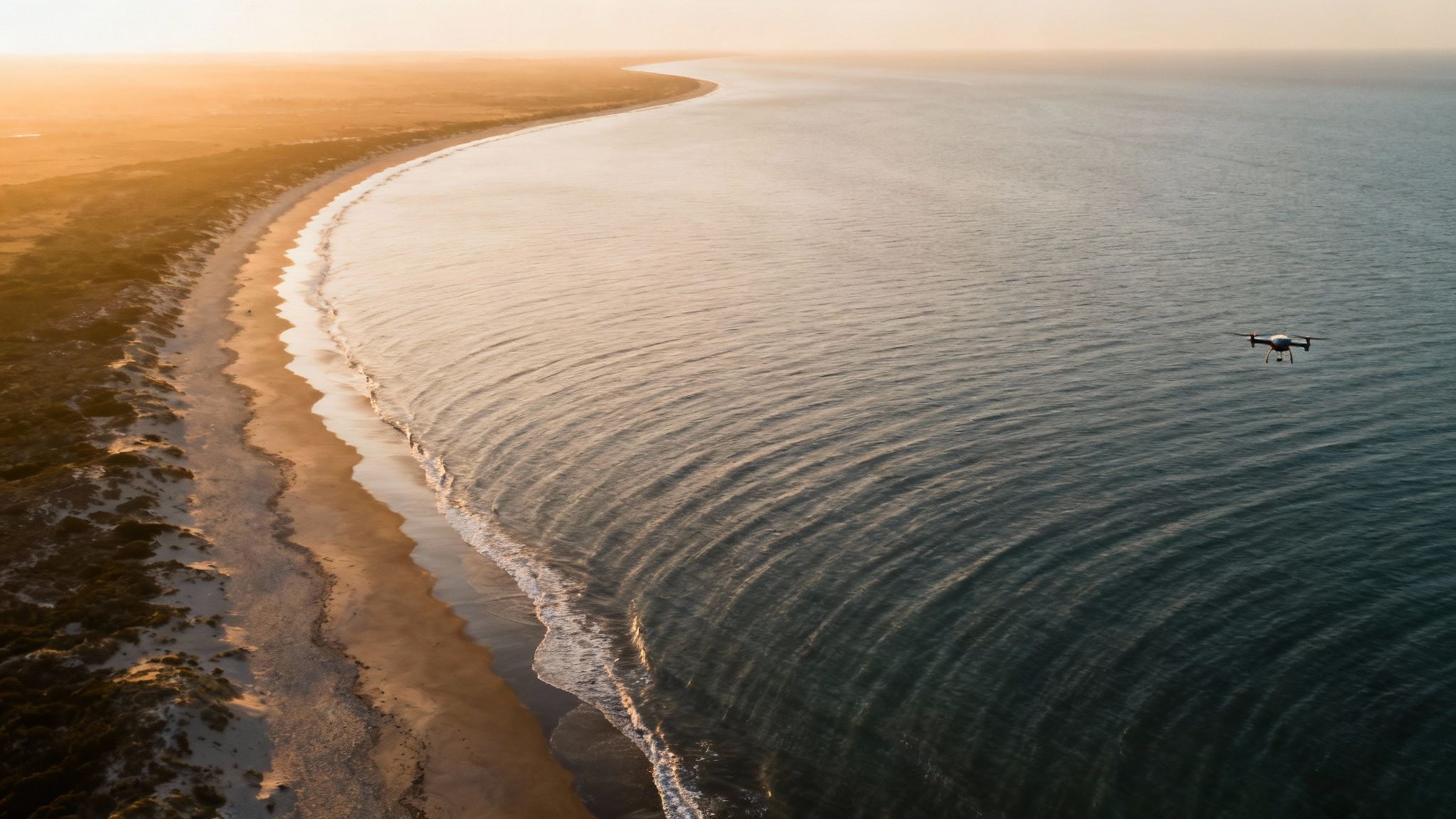
Owning a great drone is one thing, but your technique is what separates good footage from unforgettable cinema. The truth is, even a top-of-the-line drone will produce amateur-looking video if the pilot doesn't understand light, composition, and movement. It's mastering these core principles that will elevate your work from simple flyovers to truly compelling visual stories.
The single most important skill you can develop is learning to use light. We plan almost all of our critical shoots around the golden hour—that small window just after sunrise or before sunset. The soft, angled light creates long shadows, brings out texture, and bathes the landscape in a warm, dramatic glow that you just can't get from the harsh sun at noon.
Composing Your Shots from the Sky
All the classic rules of composition we use on the ground are just as important when you're in the air. From a few hundred feet up, you get a bird's-eye view that lets you find powerful visual elements to guide the viewer's eye.
- Leading Lines: Look for roads, rivers, or coastlines. These create natural paths that pull the viewer's focus toward your subject, giving the shot a real sense of depth and journey.
- Rule of Thirds: Avoid centering everything. By placing key elements like a wedding venue or a striking mountain peak off-center, you create a more balanced and interesting frame.
- Symmetry and Patterns: A top-down shot is perfect for this. Manicured gardens, city blocks, or even rows of trees can create stunning, almost abstract patterns from above.
These fundamentals are your foundation. But what really brings the footage to life is how you move the drone. If you're curious how these aerial techniques stack up against traditional camera work, our guide to the best video cameras for videography and filmmaking breaks down ground-based camera movement.
Creating Dynamic and Intentional Movement
The difference between professional and amateur drone footage often boils down to one thing: smooth, intentional movement. Abrupt, jerky flying is a dead giveaway. Instead, focus on slow, deliberate maneuvers that build a mood or reveal a scene gradually.
A static hover is fine for establishing a location, but a dynamic parallax shot—where the drone flies sideways while the camera stays locked on the subject—creates a stunning three-dimensional effect that adds immediate professional polish.
Mastering a few simple, effective moves is key. A slow "push-in" can build tension and focus, while a "pull-back" can create a grand reveal, showing the sheer scale of a location. When done smoothly, these movements tell a story; they don't just show a place.
Planning for Safety and Success
Finally, every professional flight starts long before the props spin up. Meticulous pre-flight planning is non-negotiable. This means checking the weather, scouting the location for obstacles, and knowing the airspace regulations inside and out.
For any commercial work, the pilot is legally required to hold a current FAA Part 107 certificate. This isn't just a bureaucratic hurdle; it represents a commitment to safety and professionalism that protects you, your clients, and the public. Combining great flying skills with rigorous preparation is how you consistently and safely capture those breathtaking results.
Answering Your Top Questions About Drone Photography
When you start digging into drone photography, a ton of questions pop up. What are the rules? How does weather affect a shoot? What actually makes a drone shot look cinematic? Getting straight answers is the first step to flying safely, making good calls on location, and getting incredible images for your clients.
Let's break down some of the most common questions we hear, from pilots just starting out to clients curious about the process.
Do I Really Need a License for Commercial Drone Flights?
Yes, one hundred percent. If you’re getting paid for the work—whether it’s for a wedding, a real estate listing, or any other commercial project in the United States—the pilot absolutely must hold a current FAA Part 107 Remote Pilot Certificate. This isn't just a suggestion; it's the law.
This certification proves the pilot knows the ins and outs of airspace rules, weather patterns, and safe operating procedures. Hiring a certified pilot is the only way to ensure your project is legal and safe. Flying without a license puts you, your clients, and your business at serious legal and financial risk.
How Much Flight Time Is Actually Enough for a Wedding or Event?
A single battery might be advertised with a 30-45 minute flight time, but no professional ever shows up to a job with just one. For a live event like a wedding, a pro will have a minimum of 3-5 fully charged batteries ready to go.
Think of it this way: one battery gives you a short window to fly, but multiple batteries give you the freedom to tell the whole story. This setup allows the pilot to capture the grand establishing shots of the venue, cover the entire ceremony, and still have enough juice left for those perfect golden-hour portraits without ever feeling rushed. It’s all about being prepared for the moments you can't re-do.
A single battery provides a flight window; multiple batteries provide operational readiness. For professional work, the difference is everything.
Can You Fly Drones in Wind or Rain?
The short answer here is a hard no for rain and a very cautious maybe for wind. Drones like the ones from DJI and Autel are packed with sensitive electronics, and they are not waterproof. Flying in rain, mist, or even thick fog is a recipe for disaster and can cause a complete electronic failure mid-flight.
As for wind, modern drones handle it surprisingly well, but strong gusts are a different story. High winds make for shaky, unusable footage and, more importantly, create a massive safety hazard for anyone on the ground. A professional pilot will always assess the weather on-site and will ground the drone if conditions are even slightly unsafe.
What’s the Secret to Getting That Cinematic Drone Look?
That smooth, epic "cinematic" look comes down to two things: the right camera settings and a pilot with a steady hand. It’s not just about getting airborne; it’s about making intentional choices to create drama and emotion.
On the technical side, here's what pros focus on:
- Shoot in a Flat Profile: Using a setting like D-Log captures the most color and light information possible. This gives an editor huge flexibility in post-production to color grade the footage into something truly stunning.
- Set the Right Frame Rate: For that classic movie feel, 24fps (frames per second) is the gold standard.
- Nail the Shutter Speed: The rule of thumb is to set your shutter speed to double your frame rate (so, 1/50th of a second for 24fps). This creates a natural-looking motion blur that’s pleasing to the eye.
Artistically, it's all about smooth, deliberate movements. This is what separates a professional from an amateur. We’re talking about:
- Slow, graceful reveals that unveil a landscape.
- Elegant orbits that circle a subject to add depth.
- Precise tracking shots that follow a moving car or person without any jerky movements.
When you combine the right technical settings with skilled, fluid piloting, you get breathtaking footage that truly tells a story.
At Candid Studios, our FAA-certified pilots blend technical mastery with an artist's eye to give your most important moments a stunning new perspective. To see how we can elevate your wedding, event, or commercial project with breathtaking drone photography, visit us at /.