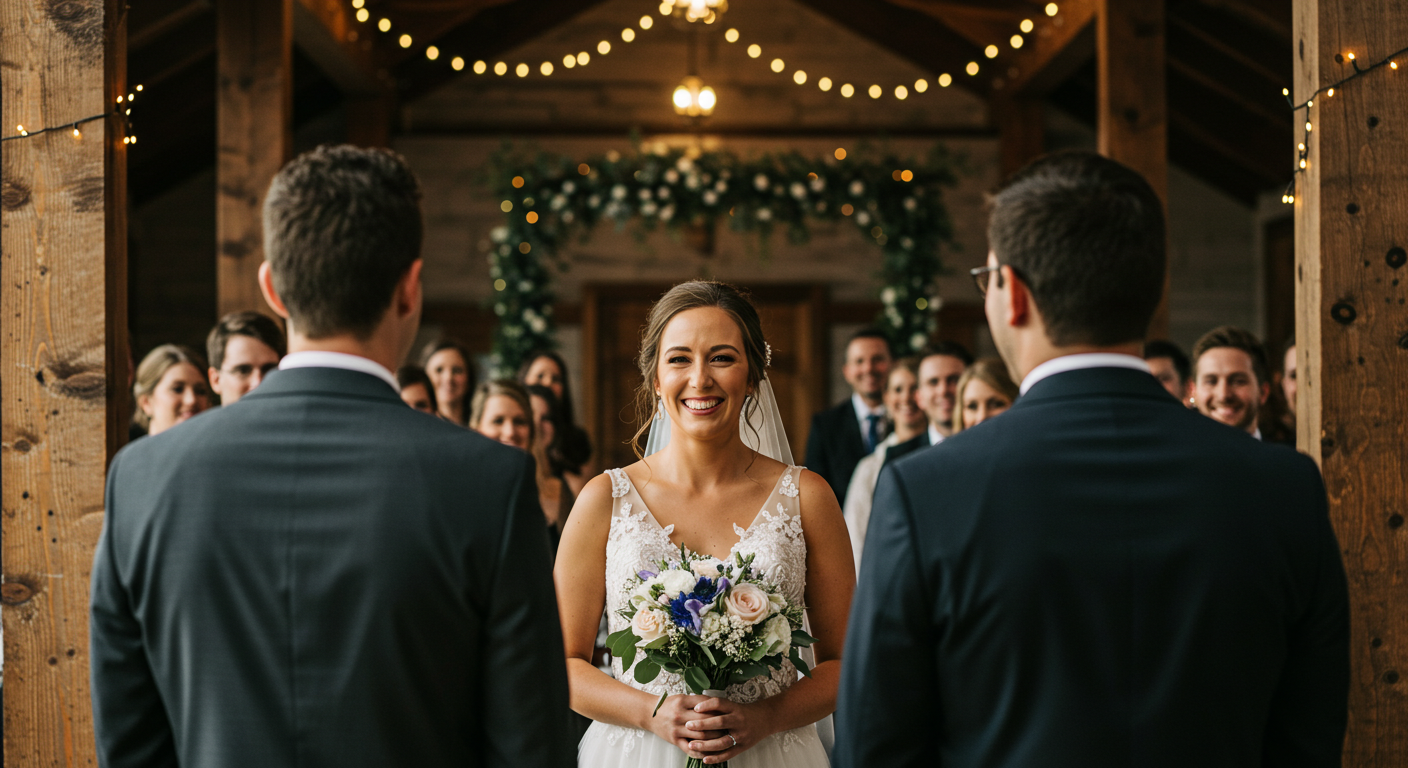
Master The Wedding Ceremony Processional Order
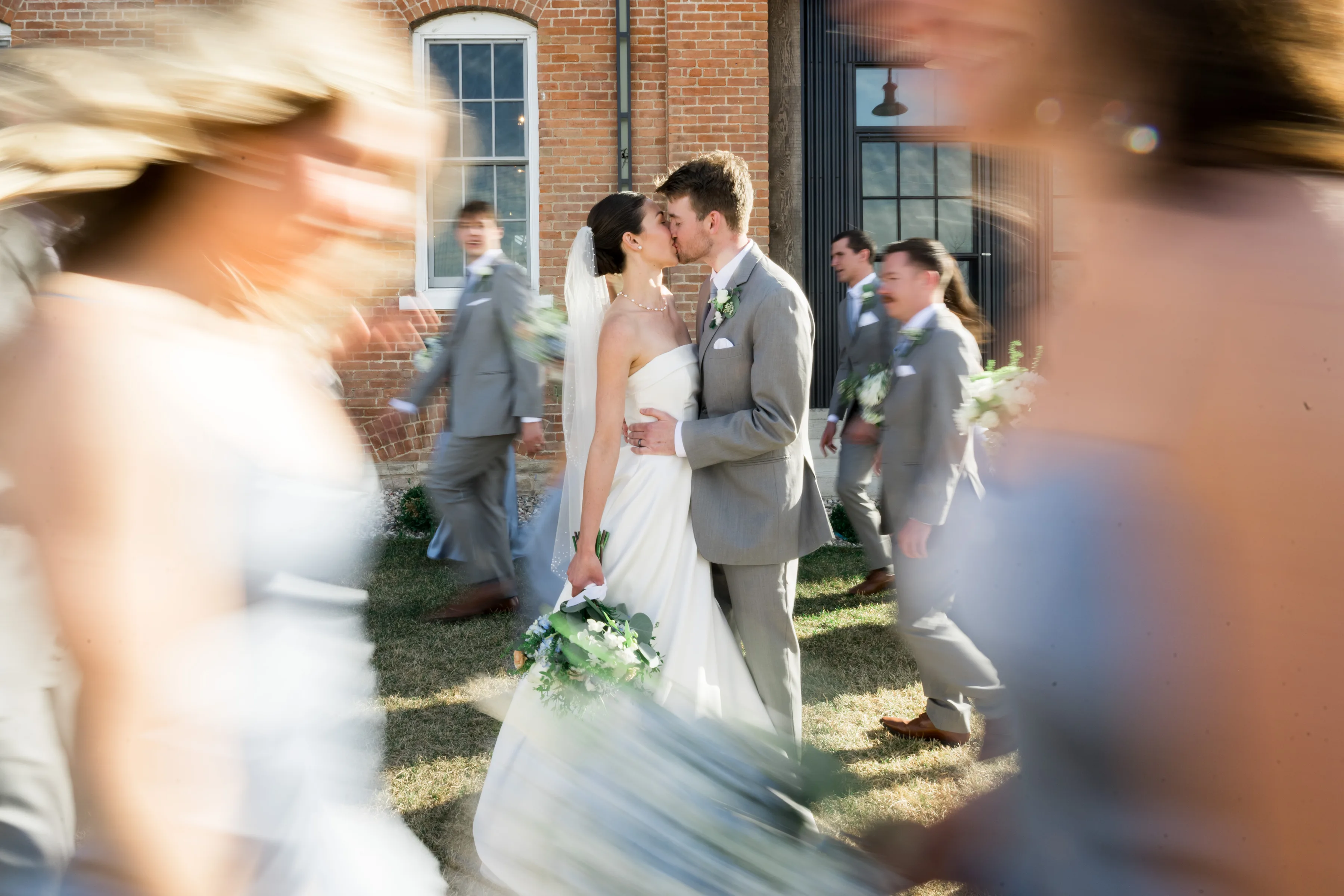
Wedding ceremony processional order traditionally sequences officiant, wedding party, and couple, but modern couples adapt freely. Share the final order with your photographer so aisles, reactions, and seating shots are not missed.
Walking down the aisle is one of those once-in-a-lifetime moments, but let's be honest, figuring out who goes when can feel like choreographing a Broadway show. The wedding ceremony processional order is simply the sequence in which your family and wedding party make their way to the front. It usually kicks off with grandparents and parents, flows into the wedding party, and builds up to the big reveal: the bride's grand entrance. Get this right, and you set a beautiful, emotional tone for the whole ceremony.
Understanding The Foundation Of The Wedding Processional Order
The walk down the aisle is so much more than just a walk. It’s the opening scene of your marriage story. This is the moment you introduce the people who have supported you most and build that electric anticipation right before you see each other at the altar.
When you understand the thinking behind the traditional sequence, you have a solid starting point to create a moment that feels both timeless and deeply personal. At its heart, the classic structure is designed to honor family and shine a spotlight on the key players in your life. It’s a familiar rhythm that has guided Western weddings for generations, and that familiarity is what helps create such an emotional impact.
The Logic Behind The Traditional Sequence
The classic wedding processional, especially in Christian Western traditions, is steeped in symbolism. It’s a reflection of family roles and cultural values. Think of it like this: the seating of grandparents kicks things off, followed by the groom's parents, and then the mother of the bride gets her special moment. After the family is settled, the officiant, the groom, and the wedding party take their places. And then, the grand finale, the bride.
This sequence, which really became the standard in the 20th and 21st centuries, is a powerful way to recognize family hierarchy and build excitement.
But here's the thing I always tell my clients: traditions are a wonderful blueprint, not a set of rigid rules. Think of the classic order as a launchpad for your own creativity.
The most memorable and significant processional you can have is one where you drop any worry about what you’re “supposed” to do and pick an order that feels great to both of you.
This mindset is freeing. It gives you permission to adapt the sequence to fit your unique family dynamics, tell your personal story, and match the overall vibe you want for your ceremony.
Why The Processional Matters
The processional is what sets the entire emotional landscape for your ceremony, which is a very different and sacred part of your wedding day. (If you want to dive deeper into how the two main parts of your celebration differ, you can learn more about the wedding ceremony vs wedding reception here).
That first walk down the aisle is where the energy truly begins to build.
- It builds anticipation: Each person who walks down the aisle raises the emotional stakes and excitement for the main event.
- It honors loved ones: It’s a beautiful, public way to recognize your parents, grandparents, and closest friends.
- It tells your story: The choices you make, from who walks with whom to the song playing in the background, are the first chapter of the story you're telling that day.
To give you a clear, at-a-glance view of how this typically unfolds, here’s a quick breakdown of the key roles in a traditional processional.
Quick Guide To Traditional Processional Roles
| Order of Appearance | Participant(s) | Brief Role Description |
|---|---|---|
| 1. | Grandparents of the Couple | Seated first to honor the eldest family members. |
| 2. | Parents of the Groom | Walk together down the aisle and take their seats. |
| 3. | Mother of the Bride | The last parent to be seated, signaling the start of the ceremony. |
| 4. | Officiant & Groom | Enter from the side or walk down the aisle to the altar. |
| 5. | Wedding Party | Enters in pairs or individually, often starting with the couple furthest from the bride/groom. |
| 6. | Maid/Matron of Honor | The last member of the wedding party to walk before the bride. |
| 7. | Ring Bearer(s) & Flower Girl(s) | Add a touch of charm right before the grand entrance. |
| 8. | Bride & Escort(s) | The final, most anticipated entrance of the processional. |
This table serves as a great starting point, but remember to make it your own!
Of course, beyond the processional, another pivotal moment is the exchange of rings. Finding the perfect symbols for your union is a key part of the planning. You can discover a variety of elegant wedding bands to find a style that truly represents your commitment.
Ultimately, once you master the processional order, you’ll feel confident and ready to create a walk down the aisle that is both authentic and beautifully orchestrated.
A Breakdown Of The Traditional Processional
Think of the classic wedding processional as the opening scene of a beautiful play. Each person's entrance has a purpose, building anticipation for the moment you finally meet at the altar. It’s a story told in steps, honoring family, tradition, and the journey that brought you here.
This isn't just about getting everyone to the front, it's about setting the emotional tone for the entire ceremony. Let's walk through who goes when and why it matters.
Honoring The Families First
Before the wedding party even lines up, the ceremony quietly begins by seating the most important family members. It’s a respectful and lovely way to acknowledge the people who have shaped you.
- Grandparents of the Couple: First up are the grandparents. Typically, the groom's grandparents are escorted to their seats, followed by the bride's. This gives them a special moment of recognition and honors the eldest generation.
- Parents of the Groom: Next, the groom’s parents make their way down the aisle together, taking their seats in the front row on the right side (from the guests' view).
- Mother of the Bride: Her entrance is the big signal. The mother of the bride is usually the last person seated before the formal processional kicks off, letting guests know the ceremony is about to begin.
This thoughtful order ensures your family's matriarchs and patriarchs are comfortably seated and honored right from the start.
The Groom And Wedding Party Entrance
With the families in place, the energy starts to build. The spotlight now shifts to the wedding party.
First, the officiant usually takes their place, either by walking down the aisle or entering from the side. Then comes the groom. He might walk in alone for a powerful moment, be escorted by his parents, or simply enter from the side with his best man to await his partner.
Then, the wedding party begins their walk. The classic order is:
- Groomsmen: They can walk in one by one or be paired up with the bridesmaids.
- Bridesmaids: Following the groomsmen, they process individually.
- Best Man & Maid of Honor: As the two key attendants, they walk just before the ring bearer and flower girl, signaling that the bride is coming soon.
Pacing is everything here. A slow, steady walk timed to the music creates an elegant and calm atmosphere. This is something you’ll definitely want to practice at the rehearsal, especially with a larger group.
Pro Tip: Have your planner or a designated point person get everyone lined up in the correct order before the music starts. This simple step prevents any last-minute shuffling and ensures a smooth, stress-free entrance for everyone.
The Youngest Attendants
Right before the main event, the ring bearer and flower girl steal the show. Their walk is a sweet, symbolic moment that prepares the path for the bride. It always gets a few smiles from the guests.
They can walk together, or you might have the ring bearer go first, followed by the flower girl scattering petals. It’s the perfect, charming prelude to the ceremony's biggest moment.
The Bride’s Grand Entrance
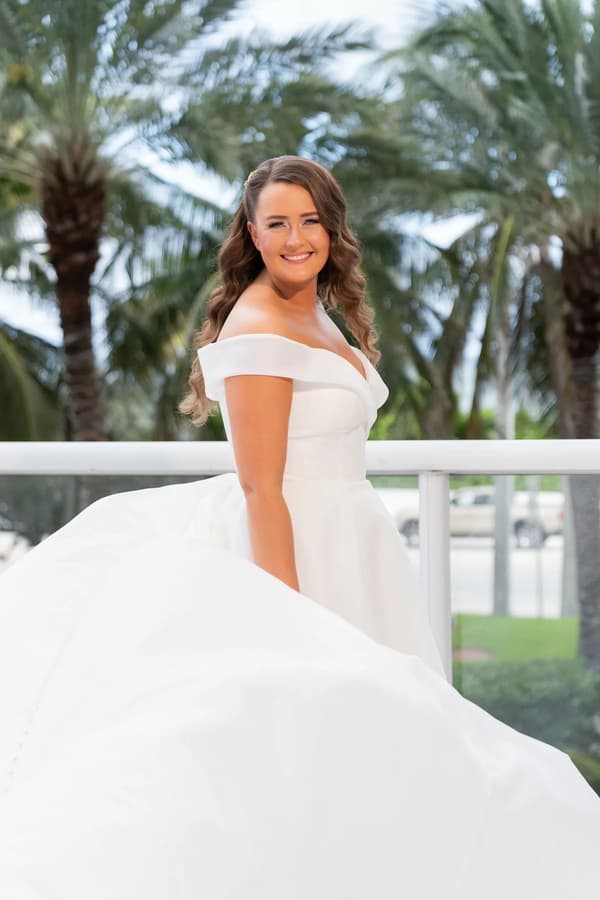
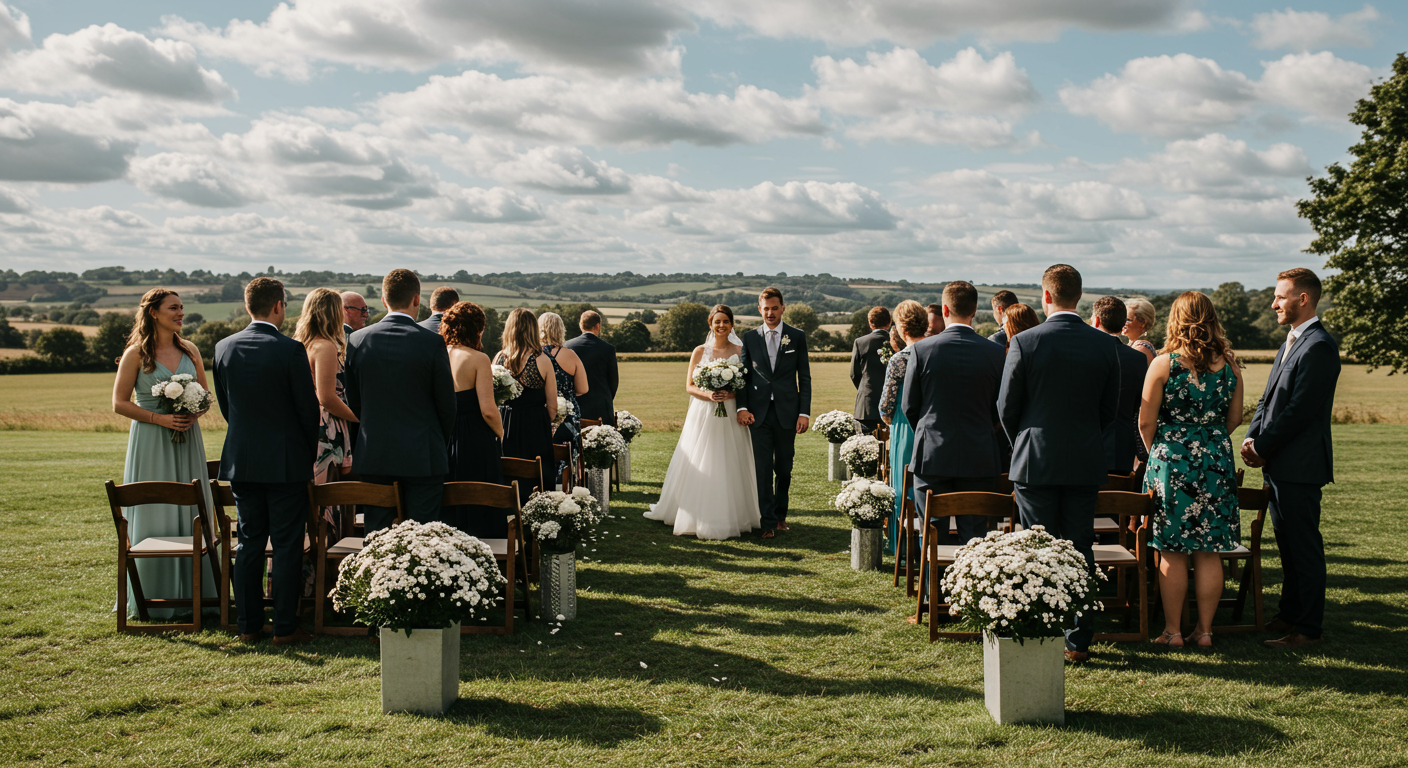
This is it. The moment everyone has been waiting for. The music swells, guests rise, and all eyes turn to the back of the aisle. The bride makes her entrance, traditionally escorted on the left arm of her father or another cherished loved one.
This walk is the emotional high point of the entire processional. As the bride reaches the front, her escort "gives her away", often with a hug, a handshake with the groom, or a kiss on the cheek, before taking their seat. The bride then joins her partner at the altar, and the ceremony officially begins.
It’s a powerful and unforgettable start to your marriage, no matter which of the top wedding ceremony spots you've chosen for your big day.
Making Your Wedding Processional Uniquely Yours
Think of your processional as the opening scene to your love story. While tradition gives us a great starting point, the most unforgettable ceremonies are the ones that feel deeply, authentically you. This is your chance to get creative and design a walk down the aisle that sets the perfect tone.
Forget what you think you're "supposed" to do. The best wedding processional is the one that feels right in your gut.
Modern Ideas For Same-Sex Couples
For same-sex couples, the processional is a fantastic opportunity to create your own traditions from scratch. Without a rigid set of rules, you’re free to design an entrance that’s incredibly meaningful.
A popular and powerful choice is to walk down the aisle together. This beautifully symbolizes entering your marriage as a united team, side-by-side from the very start. It’s a modern statement of true partnership.
On the other hand, you could each have your own grand entrance. This builds a wonderful sense of anticipation and gives each of you a distinct moment in the spotlight. Whether you’re escorted by parents, a close friend, or walk in solo, the goal is to create a sequence that celebrates both partners equally.
Weaving Blended Families Together
When you’re bringing two families together, the processional can be a powerful symbol of that new union. Including children from previous relationships is a heartfelt way to show them how central they are to this new chapter.
Here are a few ways I’ve seen this done beautifully:
- Junior Roles: Older kids can be junior bridesmaids or groomsmen, walking proudly with the wedding party.
- Special Escorts: A child can escort their parent down the aisle, either alone or with a grandparent. Trust me, it’s an incredibly touching moment.
- The New Family Unit: The couple can walk down the aisle together with their children, a moving visual of the new family you’re creating.
These gestures might seem small, but they make a huge impact, reassuring your children that they are a cherished and vital part of your marriage.
Honoring Loved Ones And Special Relationships
Your walk down the aisle is also a chance to recognize the people who have shaped your lives, both those with you and those who have passed. Don't be afraid to bend the "rules" to include who matters most.
Remembering Those Who Have Passed: A simple, elegant way to honor a loved one is by reserving a seat for them in the front row. A single flower, a small framed photo, or a special memento placed on the chair is a silent, poignant tribute. I’ve also seen family members carry a locket with a photo attached to their bouquet or boutonnière.
Unique Roles for Your VIPs:
- Both Parents Escorting: Many modern partners choose to be escorted by both parents, a lovely way to honor their equal role.
- Walking Solo: Don't underestimate the power of walking in alone. It's a bold statement of confidence and independence.
- Let the Pets In: For many of us, pets are family. A well-behaved dog can make an adorable ring bearer or flower pup, as long as you have a designated friend or family member on handler duty!
To help you visualize how you can adapt tradition, here’s a quick comparison of classic versus contemporary approaches.
Traditional Vs. Modern Processional Approaches
| Ceremony Moment | Traditional Approach | Modern & Personalized Ideas |
|---|---|---|
| Partner 1's Entrance | Groom waits at the altar. | Both partners walk in separately. |
| Partner 2's Entrance | Bride is escorted by her father. | Escorted by both parents, a sibling, or walks alone. |
| The Couple's Entrance | The couple walks down the aisle together only for the recessional (exit). | The couple walks down the aisle together at the start of the ceremony. |
| Including Children | Children are typically flower girls or ring bearers. | Children escort a parent or walk with the couple as a family unit. |
| Wedding Party | Groomsmen and bridesmaids walk in pairs. | Wedding party members walk in solo or in groups of three. "Bridesmates" and "Groomspeople" of any gender. |
| Honoring Loved Ones | Mentioned during the ceremony readings. | A photo charm on the bouquet; a seat is reserved with a flower. |
| Involving Pets | Pets are not typically included. | A dog serves as the ring bearer or "flower pup," escorted by a wedding party member. |
These modern twists often become the most talked-about moments of the day. If you’re planning a more intimate celebration, you can find even more inspiration in these ideas for small wedding ceremonies.
Ultimately, your wedding processional is a blank canvas. Fill it with the people and personal touches that truly tell your love story.
Processionals In Different Cultures And Religions
While you might have a clear picture of the classic Western processional, it’s really just one beautiful way to walk down the aisle. The journey to the altar is a tradition celebrated all over the world, and so many cultures have put their own unique spin on it, packed with symbolism and family values. Taking a look at these different approaches can be an amazing source of inspiration for your own day.
I've seen so many couples, especially those from different backgrounds, find incredible ways to honor both of their heritages. Blending these traditions can create a ceremony that’s deeply personal and truly unforgettable.
The Jewish Wedding Processional
The Jewish wedding processional is a beautiful, family-focused event that feels quite different from what you might see in a church. A key distinction is the central role both sets of parents play, escorting their children to the chuppah, the wedding canopy that symbolizes the home the couple is about to create.
The Rabbi or Cantor usually leads the way. Then comes the wonderful part that celebrates both families coming together:
- The Groom's Parents walk with the Groom down the aisle.
- The Bride's Parents then escort the Bride down the aisle.
In some traditions, the bride will circle the groom seven times once they reach the chuppah, a ritual with deep meaning. This whole approach beautifully emphasizes that a marriage is a union of two families, not just two people.
South Asian And Indian Wedding Processionals
If you've ever been to a South Asian wedding, you know they are bursting with vibrant color, joyful energy, and incredible rituals. The processional is no exception! The groom's entrance, the baraat, is often a massive celebration all on its own.
Forget a quiet walk down the aisle. The groom might arrive on a white horse, an elephant, or even in a decked-out luxury car, surrounded by a crowd of his friends and family dancing to upbeat music. It's a full-on parade that announces his arrival with unforgettable style.
The bride's entrance, or kanya aagaman, is just as breathtaking. She is often escorted by her maternal uncles or brothers, walking beneath a gorgeous floral canopy called a phoolon ki chadar. This creates a truly stunning and symbolic walk to the mandap (the wedding altar), representing her family's love and protection.
What I love about these traditions is how they remind us that the processional doesn't have to be a quiet, somber moment. It can be a vibrant, community-wide party, a powerful signal that a wedding is a joyous event meant to be shared with pure enthusiasm.
Global Traditions And Modern Influence
Around the world, the processional is shaped by local customs, though Western practices have definitely made their mark. For example, the Sri Lankan poruwa ceremony features ritualistic processions where family elders have key roles, a world away from the familiar Western lineup. Yet, of the roughly 2.2 million weddings in the U.S. each year, a huge number stick closely to "white wedding" traditions. This just goes to show how a dominant style can take hold, even while unique local customs thrive elsewhere. If you're curious, you can explore more fascinating global wedding customs and see just how diverse these ceremonies can be.
From a lone piper escorting a Scottish bride to Filipino wedding sponsors processing down the aisle, every variation tells a story about community, family, and partnership. Looking into these different approaches can spark ideas for your own ceremony, helping you craft a processional that isn't just beautiful, but also filled with personal meaning. After all, it’s your story, so tell it in a way that feels completely and totally you.
Coordinating A Flawless Processional
A beautiful processional is so much more than just a list of who walks when. It's a carefully orchestrated moment where timing, music, and people all come together perfectly. Getting the order right on paper is one thing, but making it happen flawlessly on the day? That takes smart coordination.
This is where the practical details come into play, the ones that turn a good plan into a magical experience. From lining everyone up in the right sequence to signaling the musicians, the moments before the first person walks are a quiet whirlwind of activity. Having a wedding planner, venue coordinator, or even a super-organized friend in charge of this flow is absolutely non-negotiable. They are the directors of this opening scene.
Setting The Tone With Music
Music is the emotional heartbeat of your processional. The right songs don't just fill the silence; they build anticipation and guide the pace of the entire entrance. A great approach is to select two or three distinct pieces of music to create a journey.
- A song for the family and wedding party: This tune should be elegant and set a warm, welcoming vibe as parents, grandparents, and the wedding party make their way down the aisle.
- A separate, dramatic song for the main entrance: When it's time for you or your partner to walk, a shift in the music creates that powerful "big reveal." This is your showstopper moment.
Timing the music is crucial. I always tell my couples to encourage everyone to walk slower than they think they should. A relaxed, unhurried pace looks far more graceful and gives your photographers ample time to capture beautiful shots. Make sure you talk to your DJ or musicians about the specific cues for fading songs in and out, this ensures the transitions feel completely seamless.
The Non-Negotiable Rehearsal
I can't stress this enough: there is no substitute for a ceremony rehearsal. This is your one and only chance to do a full run-through, turning abstract plans into concrete actions. It's where your wedding party learns their positions, understands the pacing, and works out any last-minute jitters.
A productive rehearsal should cover more than just the walking order. Use this time to get specific. Where do they stand once they reach the front? How much space should be left between each person? Who gives the flower girl the nod that it’s her turn?
Answering these small questions during the rehearsal eliminates so much confusion on the wedding day. It allows everyone to feel relaxed and present. The goal is for no one in your wedding party to be wondering, "Am I doing this right?" when the real ceremony begins.
This practice session is also the perfect time to sync up with your officiant and photographer. The officiant can guide the flow, while your photo and video team can see the sequence and plan their shots. When you understand the role of the photographer at a wedding, you'll see why giving them this preview is so valuable for capturing those perfect moments.
The People Who Make It Happen
On your wedding day, you shouldn't be worrying about who is next in line. Your only job is to soak in the incredible moment ahead. That’s why having a designated team to manage the processional is so vital.
Your wedding planner or coordinator is the natural leader for this. Their job is to:
- Gather and line up the entire wedding party in the correct order.
- Communicate with the officiant to ensure they are ready to begin.
- Give the final cue to the musicians or DJ to start the music.
- Signal each person or group when it's their turn to walk, ensuring perfect spacing.
If you don't have a professional planner, assign this role to a trusted and assertive friend or family member who isn't in the wedding party. They become the behind-the-scenes hero who makes sure your grand entrance is as seamless as you've always imagined.
As you coordinate your bridal party, don't forget the finishing touches that complete their look, like finding some beautiful and affordable bridesmaid jewelry sets. Handling these small details ahead of time is just one more thing that contributes to a smooth, stress-free day.
A Few Common Questions About The Processional Order
Even with the best-laid plans, a few tricky questions always seem to come up when you're finalizing the processional. Don't worry, it's completely normal. Let's walk through some of the most common queries I hear from couples so you can feel totally prepared for the big moment.
Who Actually Walks Down The Aisle First?
In most classic Western ceremonies, the procession officially kicks off once the officiant is in place at the front. From there, it's all about honoring your family.
The first people to walk down the aisle are usually the grandparents, who are escorted to their seats. The groom's parents typically follow. The final parent to be seated is traditionally the mother of the bride. Her entrance is a subtle cue to the guests, signaling that the main event is about to start. Once the family is seated, the groom and wedding party make their way down, building up to the bride's grand entrance.
What Do We Do With An Uneven Wedding Party?
First off, take a breath. Having an uneven number of bridesmaids and groomsmen is incredibly common these days. It won't look weird, I promise. It just means you have a unique group of people you love, and there are several elegant ways to handle the logistics.
Here are a few ideas I've seen work beautifully:
- A Solo Moment: The groomsmen can enter with the groom and take their places, allowing each bridesmaid to have her own moment walking down the aisle alone.
- Creative Groupings: Have one groomsman escort two bridesmaids, or vice versa. This can create a really lovely, balanced visual.
- The Alternating Walk: Simply have your wedding party members walk down one by one, alternating between a bridesmaid and a groomsman.
Honestly, the "right" way is whatever feels most comfortable for your crew and fits the space.
The most important thing is that your closest friends are standing up there with you. How they get there is just a minor detail, so pick the option that feels the least complicated and most natural for your group.
What’s The Correct Order For The Recessional?
Think of the recessional as the reverse of the processional, but with a lot more cheering! This is your big exit as a married couple, leading your guests into the celebration. The energy is high, the music is upbeat, and you're leading the way.
The typical recessional order looks like this:
- The Newlyweds! You two go first, of course.
- The Flower Girl(s) and Ring Bearer(s) usually follow right behind you.
- The Maid of Honor and Best Man exit next, as a pair.
- The Bridesmaids and Groomsmen follow, paired up.
- The Couple's Parents and Grandparents are the last of the core group to exit.
After your family has cleared the aisle, the officiant will typically invite guests to follow, usually row by row. If you're looking for more answers on ceremony logistics, you can find more tips in our list of frequently asked questions.
Does The Bride Have To Be Given Away?
Not at all. While the tradition of being "given away" has deep historical roots, it's by no means a requirement for a modern wedding. This is your moment, and you should feel empowered to shape it in a way that feels right for you.
Many couples are finding beautiful, meaningful alternatives. You could walk the aisle alone, symbolizing your independence and confidence. Or perhaps you'd like both of your parents to escort you, honoring their equal roles in your life. Another powerful option is for you and your partner to walk in together, hand-in-hand, showing that you're entering this marriage as a united team from the very first step. The choice is 100% yours.
At Candid Studios, we believe every part of your wedding day should reflect your unique story, especially the walk down the aisle. We specialize in capturing these meaningful moments with timeless photography and videography. Let's tell your story together. Visit us at Candid Studios to learn more.
Plan the day with wedding photography or contact Candid Studios.