10 Game-Changing Wedding Cinematography Tips for 2026
10 Game-Changing Wedding Cinematography Tips for 2025
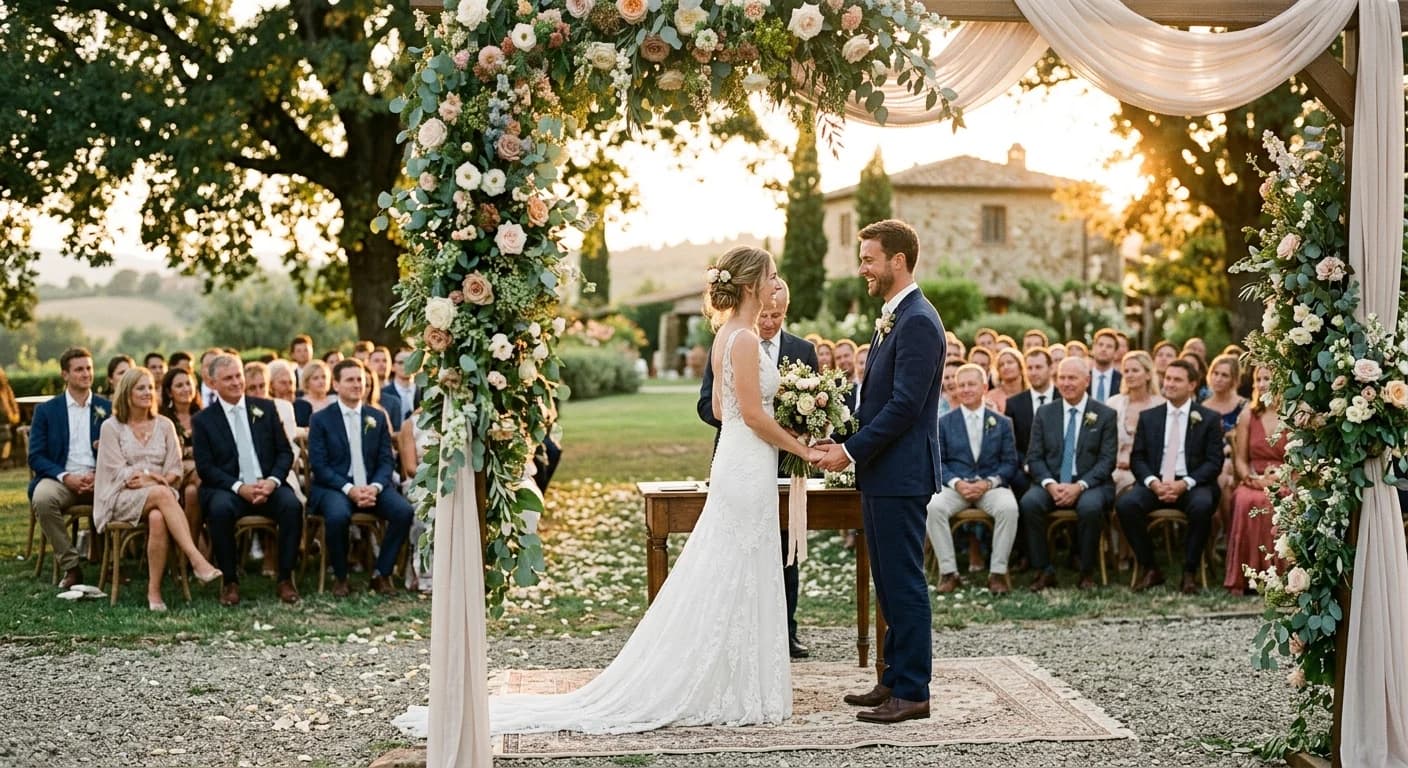
Wedding cinematography is more than just recording the day; it's about crafting an emotional, timeless story that couples will cherish for a lifetime. While capturing beautiful shots is essential, transforming that footage into a truly cinematic experience requires a blend of technical skill, artistic vision, and meticulous planning. This is the difference between simply documenting an event and producing a film that captures its soul. For couples, understanding this distinction is key to choosing the right professional to entrust with their memories.
This guide moves beyond the basics, offering a comprehensive collection of actionable wedding cinematography tips designed to elevate video work from a simple recording to a breathtaking film. We will explore the critical elements that professional cinematographers focus on to achieve polished, high-impact results. You will learn about the importance of storytelling, the technical details behind professional audio and stabilized movement, and the creative decisions that create emotional depth.
Inside this detailed roundup, you'll discover specific strategies covering every stage of the process:
- Pre-production: How to plan effectively for a seamless wedding day shoot.
- On-site Execution: Techniques for capturing dynamic shots, clear audio, and candid moments.
- Post-production: The art of editing, color grading, and music selection to build a compelling narrative.
- Client Management: Ensuring clear communication and delivering a final product that exceeds expectations.
Whether you are a couple wanting to understand what goes into a high-quality wedding film or an aspiring videographer looking to refine your craft, these insights provide a clear roadmap. Let’s dive into the techniques that separate standard wedding videos from unforgettable cinematic films.
1. Master the Art of Storytelling Through Multiple Camera Angles
Wedding cinematography is much more than just recording events; it's about weaving a compelling narrative that captures the essence of a couple's unique story. The key to creating a dynamic, engaging film lies in using multiple camera angles. This technique allows you to build a richer, more immersive viewing experience by layering wide, medium, and close-up shots to create a cohesive and emotional cinematic journey. A single, static camera can only capture one perspective, but a multi-camera setup allows you to tell a more complete story.

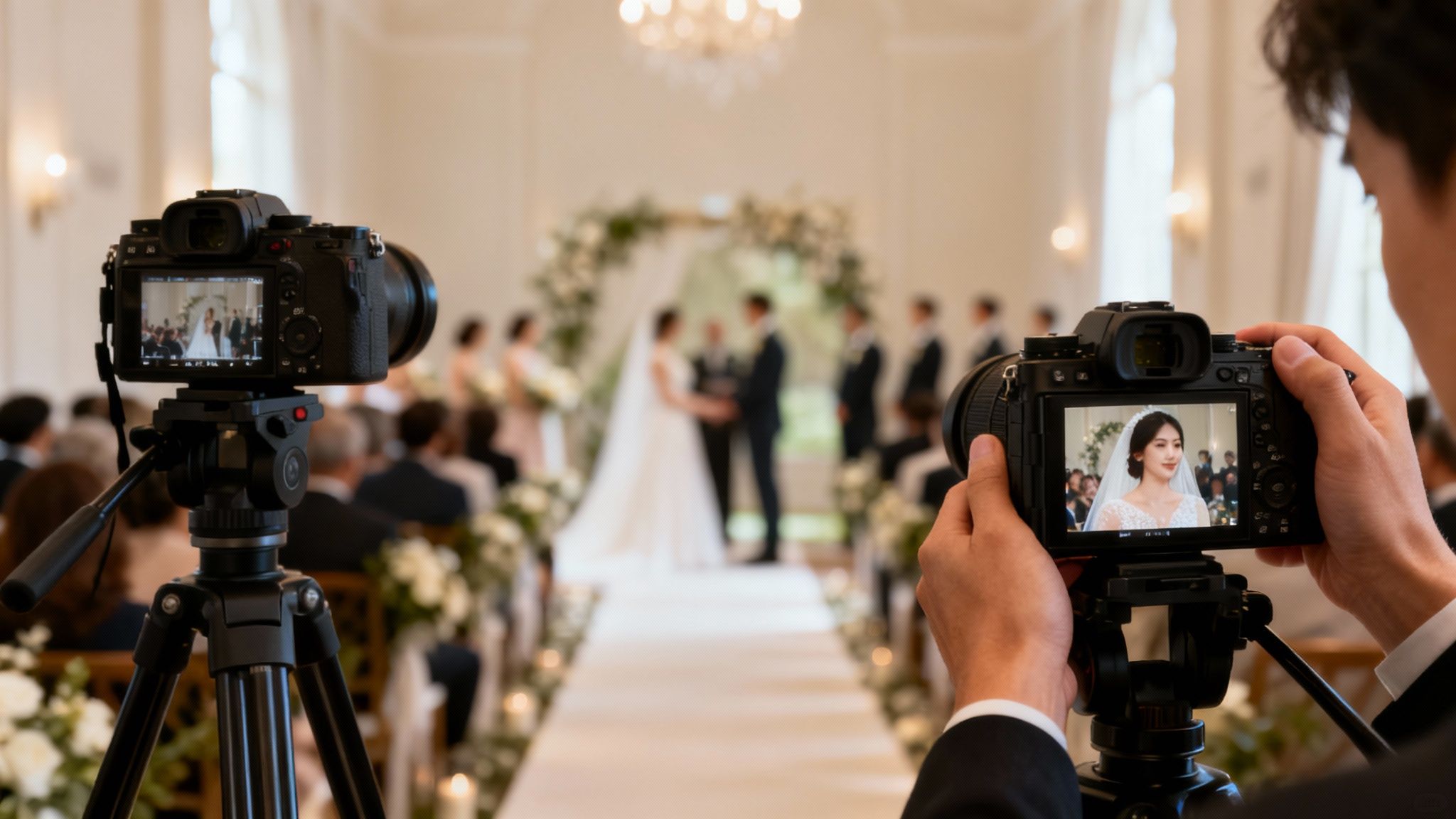
For example, during the ceremony, one camera can capture a wide shot of the venue and guests, establishing the scene. Simultaneously, a second camera can focus on the groom's reaction as a third captures the bride's emotional entrance. By cutting between these perspectives in the final edit, you create a powerful moment that a single angle could never achieve. This method is fundamental to modern wedding cinematography and is a non-negotiable for producing professional, high-quality films.
Practical Implementation
To successfully execute a multi-camera strategy, detailed planning is essential. This is one of the most crucial wedding cinematography tips for elevating your work from a simple recording to a true film.
- Assign Roles: Designate specific roles for your team. One videographer can be the "A-Cam" focused on the bride, while the "B-Cam" follows the groom's narrative. A third "C-Cam" can be stationary, capturing a wide, safe shot of the ceremony or other key moments.
- Plan Positions: During your pre-wedding consultation and venue walk-through, map out exactly where each camera will be positioned for major events like the ceremony, first dance, and speeches. This prevents confusion on the day.
- Brief Your Team: Ensure everyone on your crew knows the couple’s must-have moments and understands their assigned responsibilities.
- Synchronize Audio: A critical step for post-production is ensuring all cameras have synchronized audio. Use a high-quality external recorder as your primary source and feed its audio to each camera, or use a simple clap slate to create a sync point.
2. Invest in Professional-Grade Audio Equipment and Techniques
While stunning visuals are the first thing people notice, professional audio is what truly immerses them in the emotion of the day. One of the most common mistakes new cinematographers make is neglecting audio quality, resulting in films where vows are muffled, speeches are inaudible, and the overall impact is lost. Investing in professional-grade audio equipment is not just an option; it's an essential part of crafting a high-quality wedding film that preserves priceless memories with clarity and depth.
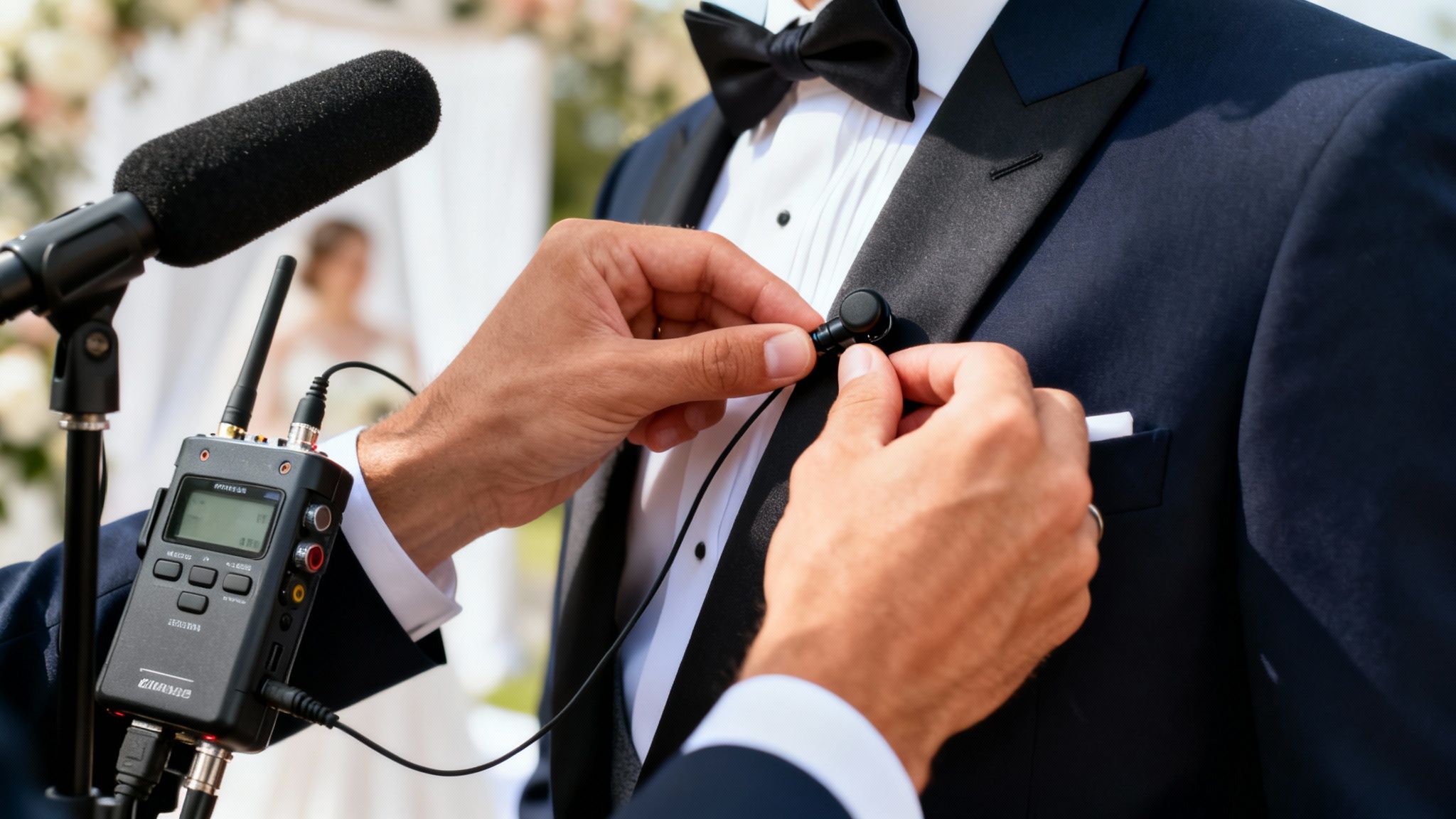
Think of it this way: the bride and groom’s vows are the heart of their story. If your audience can't hear them clearly, the emotional core of the film is missing. High-end wedding films from cinematographers like Devin Graham and award-winning studios like Candid Studios consistently feature crystal-clear audio that makes you feel like you are standing right there. This level of quality is achieved by using dedicated audio tools and techniques, not relying on the camera's built-in microphone.
Practical Implementation
Excellent audio requires a proactive strategy and the right gear. Incorporating these wedding cinematography tips will ensure your sound is as compelling as your visuals. For a comprehensive overview of essential tools, you can explore our detailed wedding videography equipment list.
- Mic the Source: The golden rule is to get the microphone as close to the sound source as possible. Use a wireless lavalier microphone on the groom to capture clean audio of both his and the bride's vows. Place a separate recorder near any speakers for toasts and speeches.
- Use External Recorders: Never rely solely on the in-camera audio. Dedicated external recorders like a Zoom H6 or Sound Devices MixPre-3 provide superior quality and act as a crucial backup.
- Monitor Your Audio: During every key moment, wear headphones to monitor the audio levels in real-time. This allows you to catch and correct issues like wind noise, interference, or clipping before it's too late.
- Scout for Sound: Visit the venue beforehand to identify potential acoustic challenges. A church with a lot of echo or an outdoor ceremony near a busy road will require different strategies than a quiet indoor space.
3. Utilize Gimbal and Stabilization Technology for Smooth, Professional Movement
Nothing separates amateur footage from a professional film more clearly than camera stability. Shaky, jarring handheld shots can distract the viewer and detract from the beauty of the moment. This is where gimbal stabilizers and other stabilization technologies become indispensable tools in wedding cinematography. They enable fluid, gliding camera movements that add a layer of polish, elegance, and high-production value to your films, transforming simple shots into breathtaking cinematic sequences.
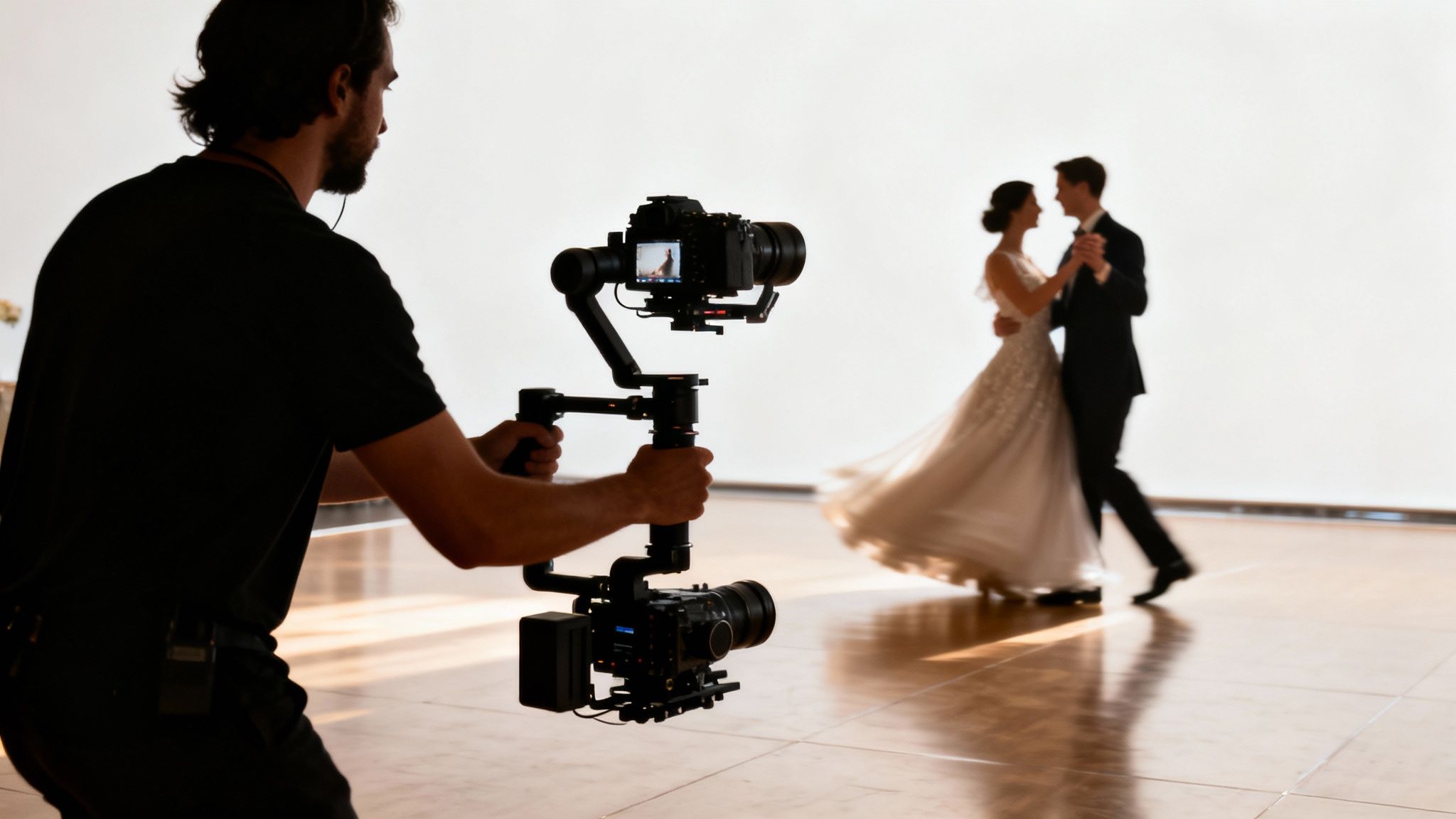
Imagine capturing the bride’s walk down the aisle with a gentle, floating movement that enhances her graceful entrance, or circling the couple during their first dance to create an intimate, immersive feeling. These are the moments where a gimbal excels, allowing you to move with the action and tell the story in a more dynamic and engaging way. The smooth motion elevates the emotional impact, making the final film feel more like a Hollywood production than a simple event recording.
Practical Implementation
Mastering gimbal movements is one of the most impactful wedding cinematography tips for creating a high-end look. Here's how to integrate this technology effectively:
- Practice Extensively: A gimbal is a tool that requires skill. Practice common movements like walking forward, backward, orbiting a subject, and "push-in" or "pull-out" shots before the wedding day to ensure your movements are confident and smooth.
- Identify Key Moments: Reserve gimbal shots for high-impact scenes. The bride's entrance, the couple's recessional, a walk through the reception space, and the first dance are perfect opportunities to add cinematic flair.
- Balance is Crucial: Always properly balance your camera on the gimbal before turning it on. An unbalanced setup will strain the motors and result in shaky footage or jitters. Re-balance every time you change a lens or add an accessory.
- Vary Your Shots: While gimbals are powerful, overusing them can make a film feel dizzying. Mix in stable tripod shots and well-executed handheld footage to create a balanced rhythm and pace in your final edit. This variation keeps the viewer engaged.
4. Plan and Execute Cinematic Drone Footage When Venue Permits
Aerial footage has become a hallmark of high-end wedding cinematography, offering breathtaking perspectives that elevate a film's production value. Drone shots provide context, scale, and a sense of grandeur that ground-level cameras simply cannot capture. By showcasing the stunning venue and its surroundings from above, you can create powerful establishing shots and transitions that instantly immerse the viewer in the wedding day's atmosphere. However, executing these shots requires meticulous planning, legal compliance, and a keen eye for safety.
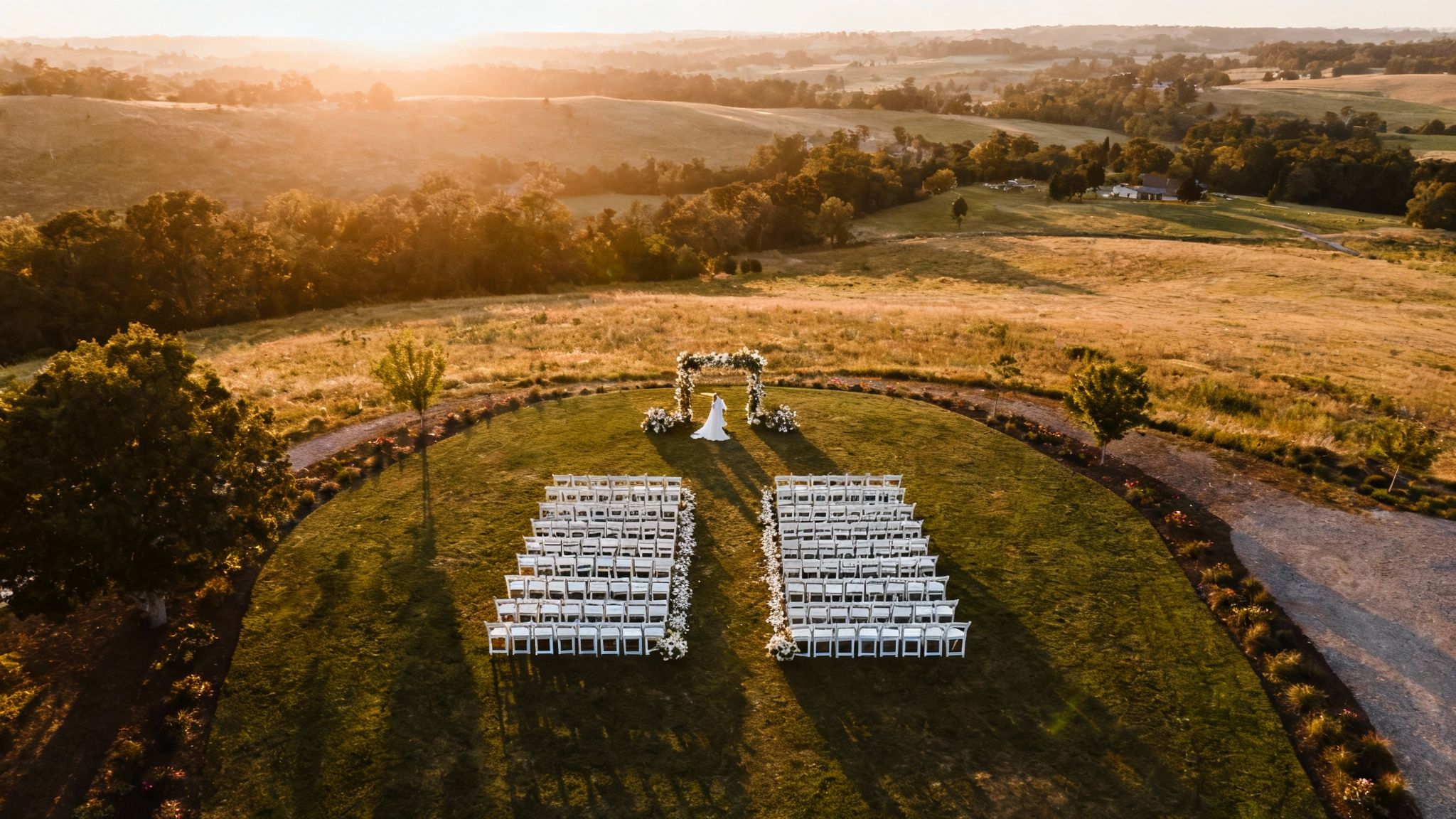
Imagine revealing a spectacular mountain ceremony in Steamboat Springs or a sun-drenched beach venue in Miami with a sweeping aerial shot. These moments create an immediate "wow" factor and set a cinematic tone for the entire film. When used thoughtfully, drone footage is more than just a novelty; it's a powerful storytelling tool that adds a layer of professional polish, which is why it's one of the most impactful wedding cinematography tips for modern filmmakers.
Practical Implementation
Successful drone cinematography is about 90% preparation and 10% execution. To ensure you capture stunning, safe, and legally compliant footage, follow a strict pre-production and on-site checklist.
- Verify Permissions: Before anything else, confirm the venue's drone policy and check for local airspace restrictions (like proximity to airports). Never assume you can fly.
- Use a Certified Pilot: The drone must be operated by an FAA-certified Part 107 pilot. This is a legal requirement for commercial use and ensures the operator understands safety protocols.
- Scout and Plan Flights: Visit the venue beforehand to identify safe takeoff and landing zones, map out flight paths, and assess potential obstacles. Plan your shots for optimal lighting, such as the golden hour, to capture the most dramatic scenes.
- Integrate Meaningfully: Use drone footage sparingly for maximum impact. One to three well-placed shots, like an opening venue reveal or a shot of the couple walking through the landscape, are far more effective than littering the film with unnecessary aerials.
- Have a Weather Backup: Drones cannot fly safely in high winds or rain. Always have a backup plan in case of poor weather conditions. For those interested, Candid Studios provides more information on the benefits and considerations of using drones for wedding photography and cinematography.
5. Capture Authentic Candid Moments While Maintaining Intentional Composition
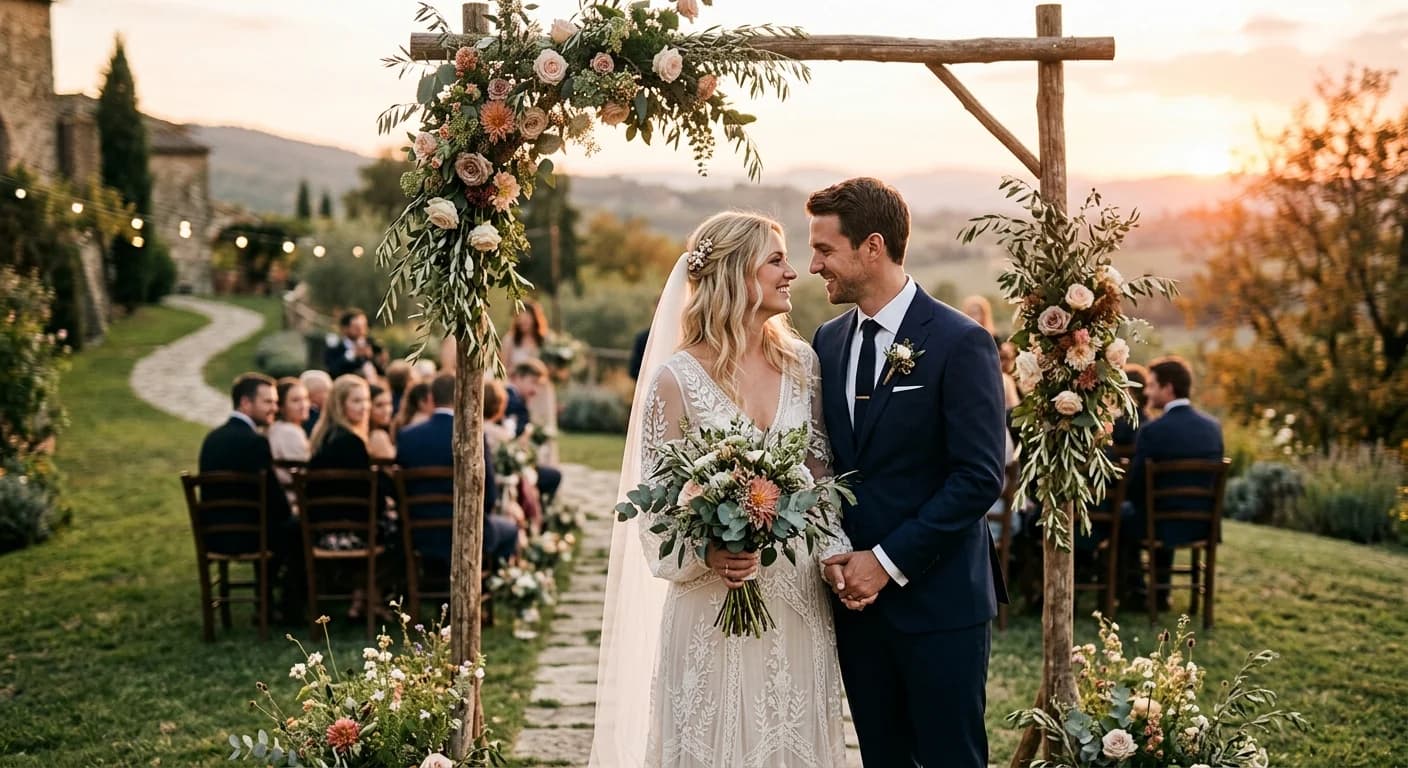
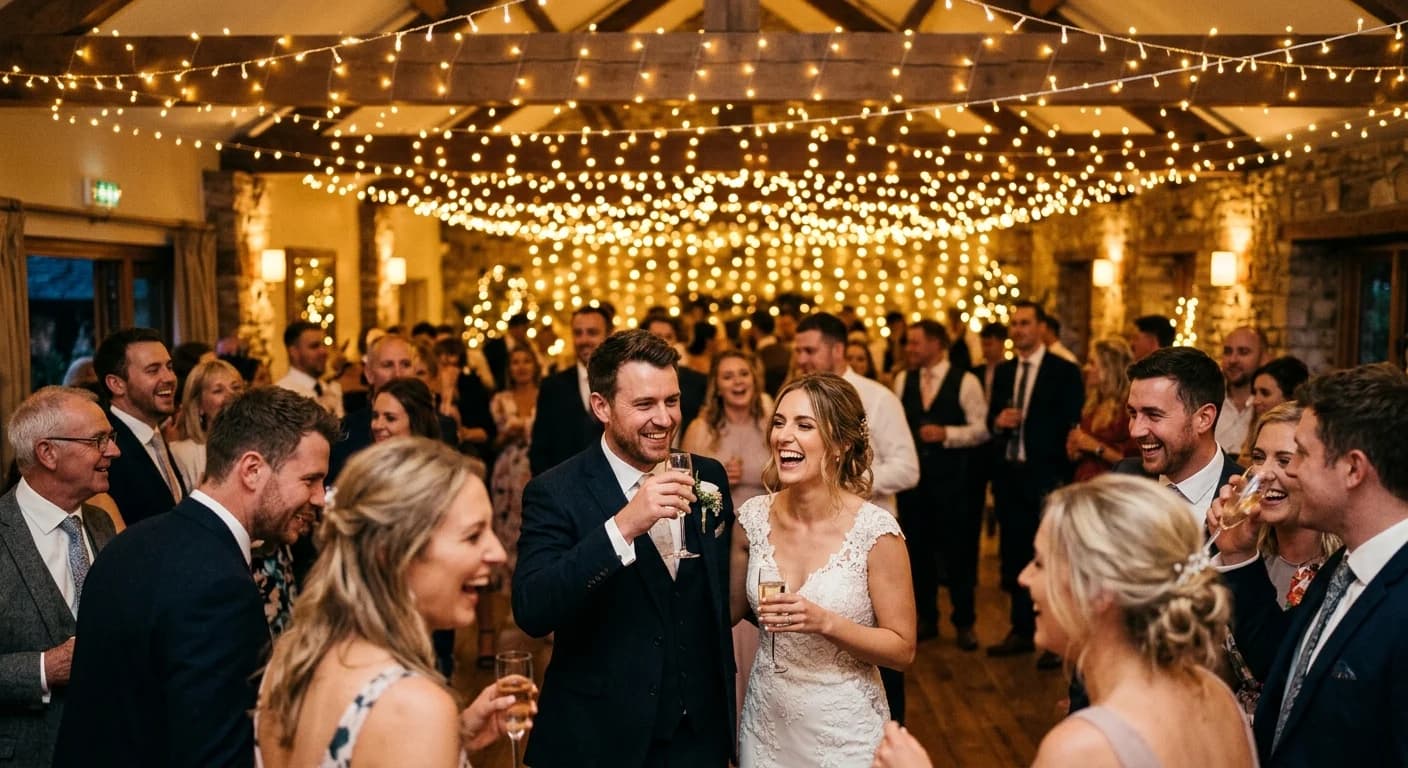
The most memorable wedding films are built on genuine, unscripted emotion. While technical skill is essential, the ability to capture authentic candid moments is what truly elevates cinematography. This involves balancing intentional composition and framing with the spontaneity of real emotions, ensuring the film feels both artful and deeply personal. It's about capturing the tear during the vows, the burst of laughter during toasts, and the stolen glances between the couple when they think no one is watching.
For instance, instead of directing a couple to interact, a skilled cinematographer anticipates a quiet moment between them during a transition and captures it from a distance with a long lens. This approach, as detailed in the art of capturing authentic moments, preserves the integrity of the emotion. The result is footage that feels real because it is real, allowing the couple’s true personalities to shine through. This method is fundamental for creating a film that resonates emotionally and stands the test of time.
Practical Implementation
To master this delicate balance, you need a strategy that combines foresight with readiness. These wedding cinematography tips are designed to help you be in the right place at the right time without being intrusive.
- Anticipate Key Moments: Study the wedding day timeline to predict when emotional peaks are likely to occur, such as the father-daughter first look, personal vows, or maid of honor's speech.
- Use Longer Focal Lengths: Lenses like an 85mm or 135mm are perfect for capturing intimate expressions from a distance. This allows you to fill the frame with emotion without disrupting the moment itself.
- Stay Discreet and Observant: Position yourself on the periphery of the action. The less people notice you, the more naturally they will behave. Learn to be a silent observer who is always ready to record.
- Shoot Through Transitions: Don't stop recording just because a scheduled event has ended. The moments in between, like the couple walking from the ceremony to the reception, are often filled with the most genuine interactions.
6. Master Color Grading and Cinematic Color Science for Emotional Impact
Color grading is the post-production magic that transforms raw, flat footage into a polished, cinematic masterpiece. It’s far more than simple color correction; it's the process of manipulating and enhancing colors to create a specific mood, ensure visual consistency, and evoke a powerful emotional response from the viewer. A professional color grade establishes a distinct visual signature for your brand and elevates the entire wedding film, making it feel more like a Hollywood production than a simple recording.
For example, warm, romantic golden hues can be applied to the ceremony and first dance to amplify the feelings of love and intimacy. In contrast, you might use cooler, sophisticated blue tones for the evening reception footage to create a more elegant and celebratory vibe. The right color science can unify disparate scenes filmed under varying lighting conditions, giving the final film a cohesive and professional aesthetic that is essential for high-end wedding cinematography.
Practical Implementation
Developing a strong color grading workflow is one of the most impactful wedding cinematography tips for creating a signature style and delivering a premium product. It's the final touch that brings your creative vision to life.
- Prioritize Skin Tones: The most critical element in any wedding film is the people. Always optimize skin tones first to ensure they look natural and healthy before stylizing the rest of the image.
- Invest in a Calibrated Monitor: You cannot accurately grade what you cannot see. A professionally calibrated monitor ensures that the colors you see on your screen are the same colors your clients will see, regardless of their device.
- Develop a Signature Style: Create a consistent color palette that becomes your brand identifier. While you should adapt the grade to each film, having a recognizable style helps you attract your ideal clients.
- Use LUTs as a Starting Point: Look-Up Tables (LUTs) are great for quickly applying a base look. However, never rely on them entirely. Use them as a foundation and then manually tweak the colors, contrast, and saturation to perfectly match each scene.
- Grade for Different Scenarios: Create separate grades for different lighting conditions encountered on a wedding day, such as bright outdoor sun, indoor tungsten lighting, and low-light reception scenes, to maintain consistency.
7. Develop a Comprehensive Pre-Wedding Consultation and Planning Process
A breathtaking wedding film doesn't happen by chance; it is born from meticulous planning and a deep understanding of the couple's story. The foundation of this understanding is a comprehensive pre-wedding consultation process. This is where you move beyond being a mere vendor and become a trusted creative partner, aligning your vision with the couple's expectations, personalities, and the unique flow of their day. This intentional approach ensures that every shot captured serves the final narrative.
This detailed planning phase is arguably one of the most critical wedding cinematography tips for ensuring a smooth, stress-free wedding day. For example, knowing the exact timing of the "golden hour" at a mountain venue in Colorado or understanding the harsh midday sun on a Miami beach allows you to plan your shots and advise the couple accordingly. Similarly, understanding family dynamics helps you anticipate and capture key emotional interactions with sensitivity and purpose.
Practical Implementation
Turning client conversations into a concrete shooting plan is what separates amateurs from professionals. A structured consultation process ensures no detail is overlooked and builds a strong rapport with your clients.
- Send a Detailed Questionnaire: Before your meeting, send a questionnaire covering style preferences, music tastes, non-negotiable "must-have" moments, and a list of key family members.
- Conduct a Vision Meeting: Schedule a video or in-person call to connect with the couple on a personal level. Discuss their love story, their vision for the film, and the overall feeling they want to remember.
- Scout the Venue: Whenever possible, visit the venue in advance. Map out potential camera positions for the ceremony, reception, and first look. Take note of lighting challenges, audio sources, and power outlet locations.
- Create a Shared Timeline: Collaborate with the couple and their planner to build a detailed cinematographer's timeline. This should include everything from prep shots to the final exit, with buffer time built in. You can learn more about optimizing your pre-wedding consultation on candidstudios.net.
- Discuss Family Dynamics: Ask about important relationships and any sensitive family situations. Knowing who the key players are ensures you focus on the moments that matter most to the couple.
8. Create Emotional Impact Through Strategic Music Selection and Editing Pacing
The soundtrack of a wedding film is its emotional heartbeat. Strategic music selection and thoughtful editing pacing are powerful tools that can transform beautiful footage into a deeply moving cinematic experience. The right song can set the tone, build anticipation, and amplify the joy or tenderness of a moment, guiding the viewer's emotional journey from start to finish. It’s the invisible thread that ties the entire narrative together.
For instance, a slow, melodic track during the "getting ready" scenes can convey a sense of calm and anticipation. This can then transition into a more uplifting, crescendo-building song for the ceremony and vows, perfectly timed so the musical peak aligns with the first kiss. The reception highlight reel can then use an energetic, joyful track to reflect the celebratory atmosphere. This intentional pairing of music and pacing is one of the most effective wedding cinematography tips for creating a film that resonates with viewers on a profound level.
Practical Implementation
Choosing and editing with music is both a technical and an artistic process. Proper planning ensures the final film feels cohesive and emotionally authentic.
- Consult the Couple: During your pre-wedding consultation, ask the couple about their favorite songs, artists, or musical genres. This provides invaluable insight into their personal style and helps you choose tracks they will connect with.
- License Your Music: Never use copyrighted music without a license. Utilize royalty-free music platforms like Epidemic Sound, Musicbed, or Artlist to find high-quality, legally-sound tracks for commercial use. Proper licensing is non-negotiable. If you need some ideas for licensed tracks, you can find more inspiration for popular wedding video songs on our Top 15 Wedding Video Songs blog. [- Create a Musical Arc: Select multiple tracks to build a narrative arc. Choose different songs for different segments of the day, such as a gentle piece for preparation, a powerful one for the ceremony, and an upbeat one for the reception.
- Edit to the Beat: Use the rhythm and structure of the music to guide your edits. Time your cuts to the beat, and align key emotional moments, like a tearful speech or the first dance dip, with a musical crescendo or a significant change in the melody.](https://www.candidstudios.net/top-15-wedding-video-songs/)
[
9. Establish Backup Systems and Redundancy for Critical Moments
In wedding cinematography, there are no second chances. Moments like the first kiss, the exchange of vows, or a heartfelt speech happen only once, making equipment failure or data loss catastrophic. Establishing robust backup systems and redundancy isn't just a safety net; it's a professional obligation. This practice involves creating multiple layers of protection for your gear, audio, and footage, ensuring that even if one component fails, you have an immediate and reliable alternative to capture every critical moment without interruption.
Imagine your primary camera's memory card corrupts right before the vows. Without a backup camera ready to go, the moment is lost forever. A professional videographer anticipates this risk by having a second, identical camera body on their person, ready to deploy instantly. Similarly, if a lavalier microphone on the groom cuts out, a redundant audio recorder placed discreetly nearby becomes the hero of the final film. These proactive measures are essential wedding cinematography tips that separate amateurs from seasoned professionals.
Practical Implementation
Building a reliable redundancy plan requires meticulous organization and a commitment to testing your systems before every event. This strategy is non-negotiable for anyone serious about producing high-quality, dependable wedding films.
- Duplicate Your Gear: Always carry at least two primary camera bodies, ideally with identical sensor technology for consistent footage. Have backups for essential lenses, batteries (at least 3-4 per camera), and memory cards.
- Implement Dual Audio Recording: For critical audio moments like vows and speeches, never rely on a single source. Use a primary lavalier microphone on the speaker and a secondary external recorder (like a Zoom H1n) placed nearby as a fail-safe.
- Test Everything in Advance: Do a full equipment check 24 hours before the wedding, not the day of. This includes formatting cards, charging all batteries, and testing audio inputs and outputs.
- Adopt a 3-2-1 Backup Strategy: After the wedding, immediately implement the 3-2-1 rule: three copies of your footage on two different types of media, with one copy stored off-site (e.g., on a cloud service like Dropbox or Google Drive and two separate hard drives).
10. Develop Efficient Editing Workflows and Deliver Professional Final Deliverables
The wedding day shoot is only half the battle; post-production is where your raw footage transforms into a polished, emotive film. An efficient editing workflow is not just about speed, it's about maintaining creative consistency and delivering a professional product on time, every time. By systemizing your process from file import to final export, you create a reliable framework that reduces errors, saves hours of work, and ensures every film meets your quality standards. This is one of the most critical wedding cinematography tips for scaling your business and managing multiple projects simultaneously.
For example, a studio with teams in different locations relies on standardized project templates and folder structures so any editor can jump into a project and understand it immediately. This structured approach ensures that whether a film is for a highlight reel, a full ceremony edit, or social media, the final deliverables are consistent and professional. After all, your final product is the ultimate representation of your brand, and a streamlined workflow is the engine that drives its quality and timely delivery.
Practical Implementation
Building a repeatable post-production system is essential for transforming your footage into a cohesive story without getting lost in the technical details. A disciplined workflow makes the creative process more enjoyable and the business side more profitable.
- Standardize File Management: Create a master folder template for every wedding. Use a consistent naming convention (e.g.,
LASTNAME_DATE_PROJECT) and have subfolders forRAW FOOTAGE,AUDIO,PROJECT FILES,MUSIC, andEXPORTS. - Create Project Templates: Within your editing software, build templates for different deliverables. A template for a highlight film can have pre-built sequences, color grading adjustment layers, and graphic placeholders to speed up the initial setup.
- Use Proxy Files: For smoother playback and faster editing, especially with 4K or 6K footage, create low-resolution proxy files. This allows your system to perform efficiently without lagging.
- Batch Your Tasks: Group similar tasks together. Cull all footage first, then build your story, then color grade all clips, and finally, do a sound mix for the entire film. This focus prevents context-switching and improves efficiency.
- Establish an Export Checklist: Create a final checklist to review before exporting. This should include checking for audio levels, consistent color, correct titles, and export settings to prevent common delivery errors. Delivering via a secure cloud link is often more professional and trackable than physical media.
Wedding Cinematography: 10-Tip Comparison
Item
Implementation Complexity 🔄
Resources & Cost ⚡
Expected Outcomes ⭐ 📊
Ideal Use Cases 💡
Key Advantages
Master the Art of Storytelling Through Multiple Camera Angles
High — coordination, shot planning, timeline sync
Multiple cameras, crew, audio sync; higher equipment & crew cost
Cinematic, multi-perspective narrative; robust coverage and edit options
Full-day weddings, simultaneous events, cinematic packages
Multi-angle coverage, dynamic editing, redundancy
Invest in Professional-Grade Audio Equipment and Techniques
Medium‑High — technical setup and live monitoring
Wireless lavaliers, external recorders, mixers; $500–$2,000+
Crystal-clear vows/speeches; emotional clarity and higher production value
Ceremonies, toasts, intimate vow exchanges
Clear dialogue, redundancy, significantly improved impact
Utilize Gimbal and Stabilization Technology
Medium — operator skill & practice required
Gimbals, batteries, follow-focus; moderate equipment cost
Smooth, polished motion; creative tracking shots
Entrances, first dance, venue walk-throughs
Cinematic movement, affordable crane-like shots, visual polish
Plan and Execute Cinematic Drone Footage When Venue Permits
High — certification, permits, safety planning
Certified pilot, drone hardware $1,500–$3,000+, permits
Stunning aerials, venue context; boosts perceived value
Outdoor venues, estate reveals, scenic locations
Unique perspectives, high shareability, venue establishing shots
Capture Authentic Candid Moments While Maintaining Composition
High — anticipation, discretion, real-time decisions
Fast tele/prime lenses, stealthy positioning; experience more than cost
Emotionally resonant, genuine storytelling
Documentary-style couples, natural wedding priorities
Authentic emotion, differentiated style, relatable footage
Master Color Grading and Cinematic Color Science
High — steep learning curve, color theory
Grading software & calibrated monitor; $55–$500+/mo plus hardware
Consistent cinematic look, mood control, brand signature
Premium films, brand-driven portfolios
Elevates footage to cinema quality, strong emotional tone
Develop a Comprehensive Pre‑Wedding Consultation and Planning Process
Medium — time‑intensive but procedural
Time, site visits, questionnaires; minimal hardware cost
Aligned expectations, smoother capture, fewer surprises
Complex timelines, high-touch clients, multi‑vendor days
Reduces risk, personalized approach, improved execution
Create Emotional Impact Through Strategic Music Selection and Pacing
Medium — licensing + editing skill
Music licenses $100–$500+, editing time and platforms
Heightened emotional crescendos, shareable highlight reels
Montages, highlight reels, emotionally driven edits
Amplifies emotion, guides viewer journey, boosts engagement
Establish Backup Systems and Redundancy for Critical Moments
Medium‑High — logistics and maintenance
Duplicate bodies, external recorders, extra batteries, redundant storage; $5,000+
High reliability; protects critical moments from failure
All weddings, especially high‑stakes or large events
Risk mitigation, professional reliability, peace of mind
Develop Efficient Editing Workflows and Deliverables
Medium — upfront setup, discipline required
Editing software, templates, cloud delivery tools; time investment
Faster turnaround, consistent quality, scalable production
Studios, multi-location teams, high-volume schedules
Efficiency, predictable delivery, easier team collaboration
Bringing It All Together: Your Path to Cinematic Excellence
The journey from simply recording a wedding to crafting a truly cinematic film is paved with intention, skill, and a deep appreciation for storytelling. Throughout this guide, we've explored the essential pillars that elevate wedding videography into an art form. We moved beyond basic camera settings and delved into the nuanced techniques that separate a good film from an unforgettable one. The core takeaway is this: technical proficiency and creative vision are two sides of the same coin, and one cannot reach its full potential without the other.
Mastering these wedding cinematography tips means understanding that every decision, from the initial client consultation to the final color grade, contributes to the emotional resonance of the final product. It’s about recognizing that pristine audio is just as crucial as a beautiful shot, and that the seamless movement of a gimbal can draw the viewer directly into the heart of a moment. It's the synthesis of planning, execution, and post-production artistry.
Key Pillars of Cinematic Wedding Films
Let's distill the most critical takeaways from our comprehensive list:
- Story First, Always: Before you ever press record, you must understand the story you're trying to tell. This is achieved through detailed pre-wedding consultations, understanding the couple's dynamic, and identifying the key emotional beats of their day. Your shot list, music choice, and editing pace all flow from this narrative foundation.
- Technical Excellence is Non-Negotiable: Cinematic quality is impossible without a firm grasp of the technicals. This includes investing in professional audio gear to capture clear vows, utilizing stabilization for smooth, flowing shots, and establishing redundant backup systems to protect against any possibility of data loss. These aren't just best practices; they are the bedrock of professional reliability.
- The Power of Post-Production: The magic truly happens in the edit. This is where you weave together multiple camera angles, candid moments, and epic drone shots into a cohesive narrative. Your strategic music selection dictates the emotional rhythm, while a masterful color grade infuses every frame with a specific mood and style, transforming raw footage into a polished, cinematic experience.
Your Actionable Path Forward
Becoming a premier wedding cinematographer is an ongoing process, not a final destination. To continue your growth, focus on a few key areas. Begin by refining your pre-production workflow. Create a comprehensive questionnaire for couples that helps you uncover the unique details of their story. Next, practice intentional composition even when capturing candid moments; look for leading lines, framing, and the emotional interplay between subjects.
](https://www.candidstudios.net/top-15-wedding-video-songs/)
Furthermore, dedicate time to expanding your knowledge beyond the specifics of weddings. To truly achieve cinematic excellence in wedding films, it's beneficial to incorporate broader video production best practices. Mastering concepts like lighting, sound design, and narrative structure on a deeper level will directly translate into more compelling wedding films. For a comprehensive overview, the guide on 9 Video Production Best Practices from TimeSkip offers invaluable insights that are applicable across all genres of filmmaking, including the specialized world of weddings.
[
Ultimately, the most impactful wedding cinematography tips are those you actively integrate into your craft until they become second nature. Don’t be afraid to experiment with new techniques, develop your unique artistic voice, and consistently seek feedback. By blending the technical advice outlined here with your passion for storytelling, you will not just capture weddings; you will create timeless, emotional heirlooms that couples will treasure for a lifetime. Your dedication to excellence is what will turn their fleeting moments into an enduring cinematic legacy.
](https://timeskip.io/blog/video-production-best-practices)
Ready to see these principles in action? The team at Candid Studios has spent years mastering the art of wedding cinematography, turning authentic moments into breathtaking films. If you're looking for a dedicated team to tell your unique love story with passion and professionalism, explore our portfolio and get in touch with us at Candid Studios.