How to Find a Wedding Photographer That You Will Love
How to Find a Wedding Photographer That You Will Love
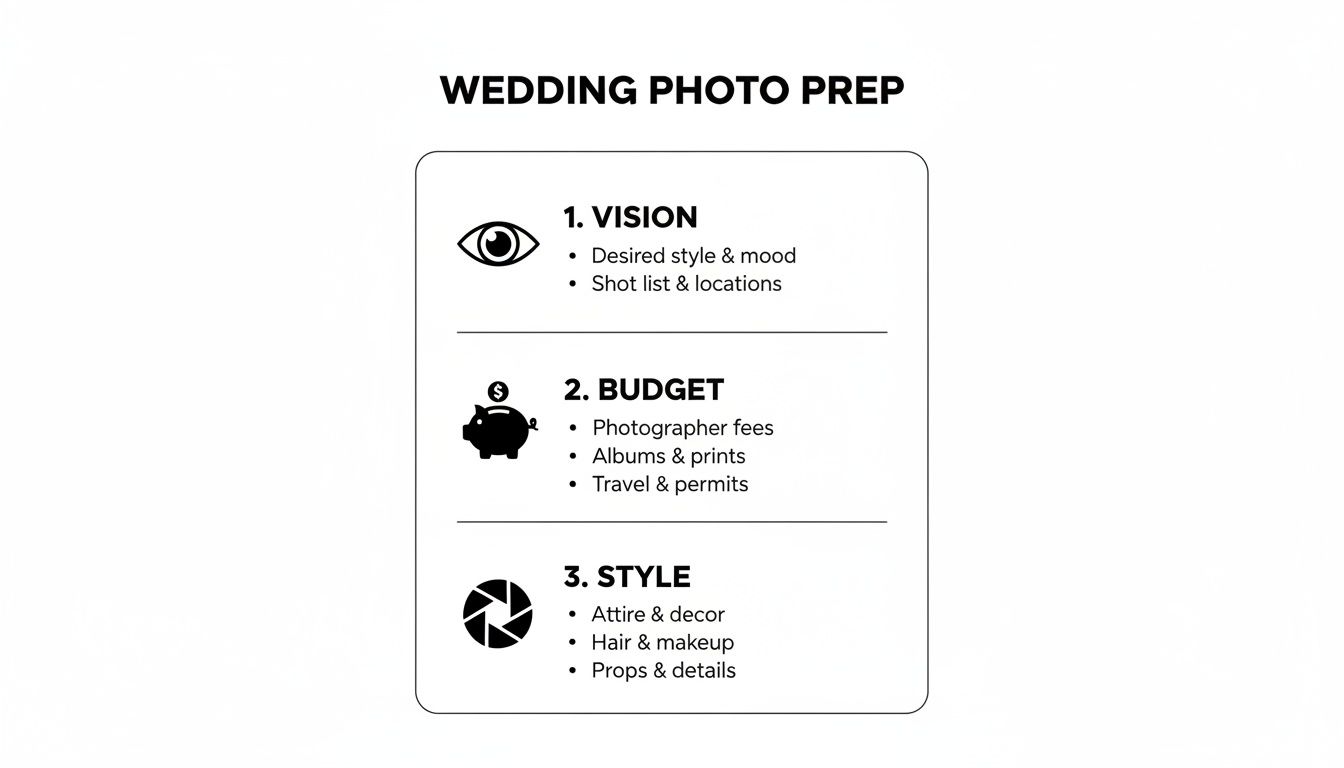
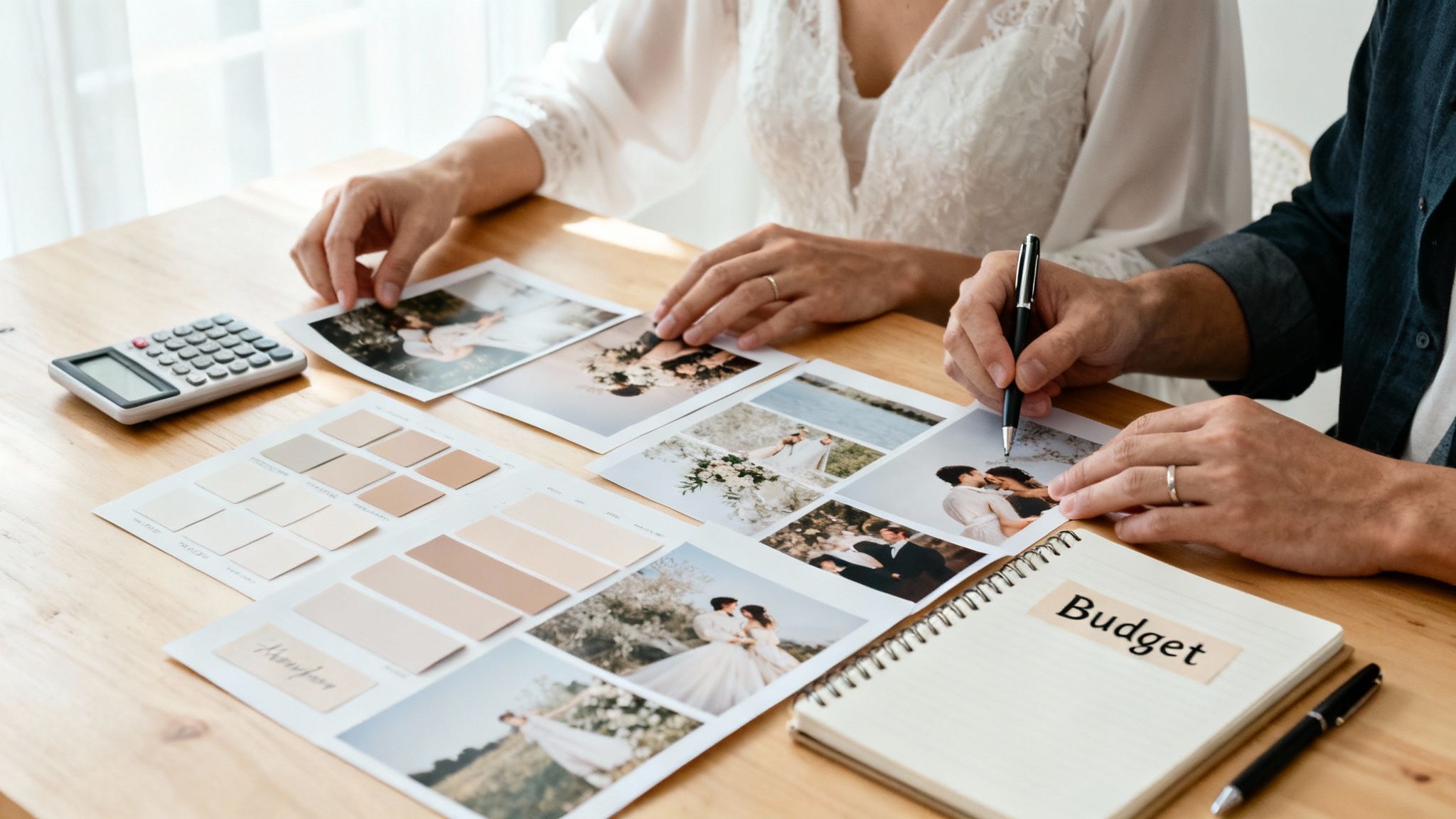
Before you even think about scrolling through Instagram or asking for recommendations, the very first step—the one that will save you countless hours and a lot of headaches—is to get clear on two things: your style and your budget. It’s easy to get swept away by beautiful photos, but without a solid vision and a realistic number in mind, you're just window shopping. Nailing this down first makes the entire search focused, efficient, and honestly, a lot more fun.
Defining Your Vision And Setting a Realistic Budget
Let’s talk vision. This is all about how you want to feel when you look back at your wedding photos years from now. Do you picture light-filled, romantic images that feel timeless and classic? Or are you drawn to photos with deep, rich tones and dramatic shadows that have a more cinematic vibe?
This is where knowing a bit about photography styles really helps. Some photographers are masters of the photojournalistic approach, capturing candid, in-the-moment emotions as they happen. Others lean into a fine art style, creating meticulously composed, artistic shots that look like they belong in a magazine. There's no right or wrong answer—it's about what resonates with you as a couple.
Aligning Your Vision With a Realistic Budget
Okay, now for the money talk. wedding photography is a serious investment, and it’s important to understand why. The industry was recently valued at a massive $23.36 billion, and it’s not just because photographers have nice cameras. It’s because 90% of couples see professional photography as a non-negotiable part of their day.
On average, most couples set aside about 8% of their total wedding budget for photography, which often lands around $2,900. But here's an interesting tidbit: 57% of couples admit they're willing to stretch their budget for the right photographer over other vendors. That speaks volumes about how important these memories are.

A Quick Guide to Photography Styles
Feeling a little lost in all the terminology? You're not alone. Words like "documentary," "fine art," and "traditional" get thrown around a lot. To help you put a name to the look you love, here's a quick breakdown of the most common styles.
Decoding Common Wedding Photography Styles
Photography Style
Key Characteristics
Best For Couples Who…
Photojournalistic/Documentary
Unposed, candid shots capturing real moments. Tells the story of the day as it unfolds, with minimal direction from the photographer.
Want their photos to feel authentic and emotional, focusing on genuine interactions rather than posed portraits.
Fine Art
Artistic, intentionally composed images. Often has a soft, romantic, and airy feel. Every shot is framed with an artist's eye.
Love dreamy, editorial-style photos and appreciate a curated, detail-oriented approach to their wedding gallery.
Traditional/Classic
Timeless, formal portraits and classic wedding moments (cake cutting, first dance, etc.). Relies on posed shots of family and the couple.
Value formal group photos and want a more structured, classic record of their day.
Moody & Dramatic
Uses deep shadows, rich colors, and dramatic lighting to create a cinematic, emotional feel. Often has a darker, more intimate vibe.
Are drawn to bold, unconventional images that evoke a strong mood and feel like scenes from a movie.
Lifestyle
A blend of photojournalism and fine art. The photographer provides gentle direction to create natural-looking moments in beautiful light.
Want their photos to look candid but still polished, capturing their connection in an authentic yet flattering way.
Think of these styles as a starting point. Many photographers blend elements from different aesthetics, so don't be afraid to tell them you love the candid feel of photojournalism but also want some stunning, artfully directed portraits.
Building Your Financial Plan
So you have a style in mind and a number you're comfortable with. Now what? Your budget isn't just one single price; it's a plan for what you're getting. A standard package usually includes a set number of hours with one photographer and a digital gallery. But the final cost can shift based on a few key things:
- Experience Level: A seasoned pro with a decade of weddings under their belt is going to invest more in their craft and business, and their pricing will reflect that expertise.
- Coverage Hours: The more of your day you want captured—from getting ready to the final send-off—the more it will cost.
- Add-Ons: Popular extras like a second photographer (highly recommended for larger weddings!), an engagement session, or a beautiful custom album will add to the bottom line.
If you’re thinking about a wedding somewhere truly special, the logistics of planning a destination wedding will absolutely play a big role in your photography budget. For a deeper dive into the numbers, our guide on How To Budget For A Wedding is a great place to start.
By sorting out your vision and finances first, you're setting yourself up to find a photographer you’ll not only love but who you can book with total confidence.
Finding and Shortlisting Potential Photographers
Alright, you’ve nailed down your style and have a budget in mind. Now for the fun part: finding the one. Let's turn that vision into a reality. The goal here isn't to look at a hundred photographers, but to create a solid shortlist of five to seven people whose work really speaks to you.
Start with Curated Wedding Platforms
Jumping straight into a Google search can feel like drinking from a firehose. A better first step is to check out wedding-specific platforms that have already done some of the filtering for you.
- The Knot and WeddingWire: These are the big players for a good reason. Their directories are massive, letting you filter by location, style, and price. Most importantly, they have verified reviews from real couples, which is pure gold.
- Zola: If you love a clean, easy-to-use site, Zola is fantastic. They feature a well-curated list of photographers and often highlight award-winners.
Speaking of awards, they can be a great shortcut to finding top-tier talent. Accolades like The Knot Best of Weddings or NOCO Style's Best Wedding Videographer (which we're proud to hold at Candid Studios!) are signals of consistent quality and happy clients.
Leverage Social Media Strategically
Instagram is basically a living, breathing portfolio for wedding photographers, but it's easy to fall down a rabbit hole of endless scrolling. The trick is to be strategic with your search.
Instead of a generic search like #weddingphotography, get specific. Tying the knot in Miami? Search hashtags like #miamiweddingphotographer, #southfloridawedding, or even your venue's tag, like #vizcayawedding. This immediately connects you with photographers who know your area inside and out.
Pro Tip: When you find an Instagram profile you love, don't stop at their curated feed. Click on their "tagged photos" section. This is where you'll see their work in the wild, from real weddings and other vendors, giving you a much more authentic view than just the polished highlight reel.
Tap Into Your Vendor Network
This is one of the most powerful, yet underused, resources you have. Your venue coordinator, planner, or even your florist has worked alongside countless photographers.
They know who shows up on time, who is a dream to work with, and who makes the day run smoothly—things a portfolio alone can't tell you. Ask them for a handful of their favorite recommendations. You'll often get a pre-vetted list of reliable pros who consistently do amazing work.
Compile Your Initial Shortlist
As you browse, keep a running list. A simple spreadsheet is perfect for this. Jot down the photographer's name, website, Instagram handle, and a quick note on why you liked their work.
The US photography industry is a massive field, with recent revenues hitting $15.8 billion and employing over 114,000 people. That means you have an incredible amount of talent to choose from, but it also means the best photographers get booked up fast.
Once you have a list of five to seven contenders, you're in a fantastic spot. It’s a manageable number that won't leave you feeling overwhelmed and gives you solid options to compare. Timing is everything, so our guide on when to book a wedding photographer can help you make sure you're on track. Now, you’re ready for the next step: taking a deep dive into their portfolios.
How to Analyze a Photographer's Portfolio Like a Pro
A photographer's Instagram feed is their highlight reel—a meticulously curated collection of their absolute best shots. It's a great place to start, but relying on it alone is a bit like judging a movie by its two-minute trailer.
To get the real story of a photographer's skill, you need to look beyond the curated perfection and dig into their full body of work. This is how you find someone who delivers amazing results from the getting-ready chaos to the dimly lit dance floor, not just during that perfect golden-hour sunset.
Go Beyond the Highlight Reel: Ask for Full Galleries
This is the most important step. You need to ask to see at least two or three full wedding galleries.
Why more than one? An incredible gallery could be a fluke. Maybe they had a perfect venue, ideal lighting, and a couple who could be professional models. Seeing several galleries shows you their true baseline for quality and how they perform across different scenarios.
A full gallery is the complete story of a wedding day, often containing 500-1000+ images. It’s the unfiltered truth, revealing how they handle every single part of the day.
This is non-negotiable. If a photographer hesitates or won't share full galleries, consider it a major red flag. A confident professional will be proud to show you their complete work. It proves they can deliver a consistently high-quality final product, not just a few lucky shots.
When you get these galleries, you're looking for much more than just a handful of pretty pictures. You’re assessing their technical skill, their storytelling ability, and their artistic consistency from the first photo to the last.
What to Look for in a Full Wedding Gallery
Once you have the galleries open, don't just casually scroll through. Put on your critic hat and analyze them. To really know what you're looking for, understanding the core elements of a successful photo session, like composition and capturing raw emotion, is a huge help.
Here’s a quick checklist of what to keep an eye on:
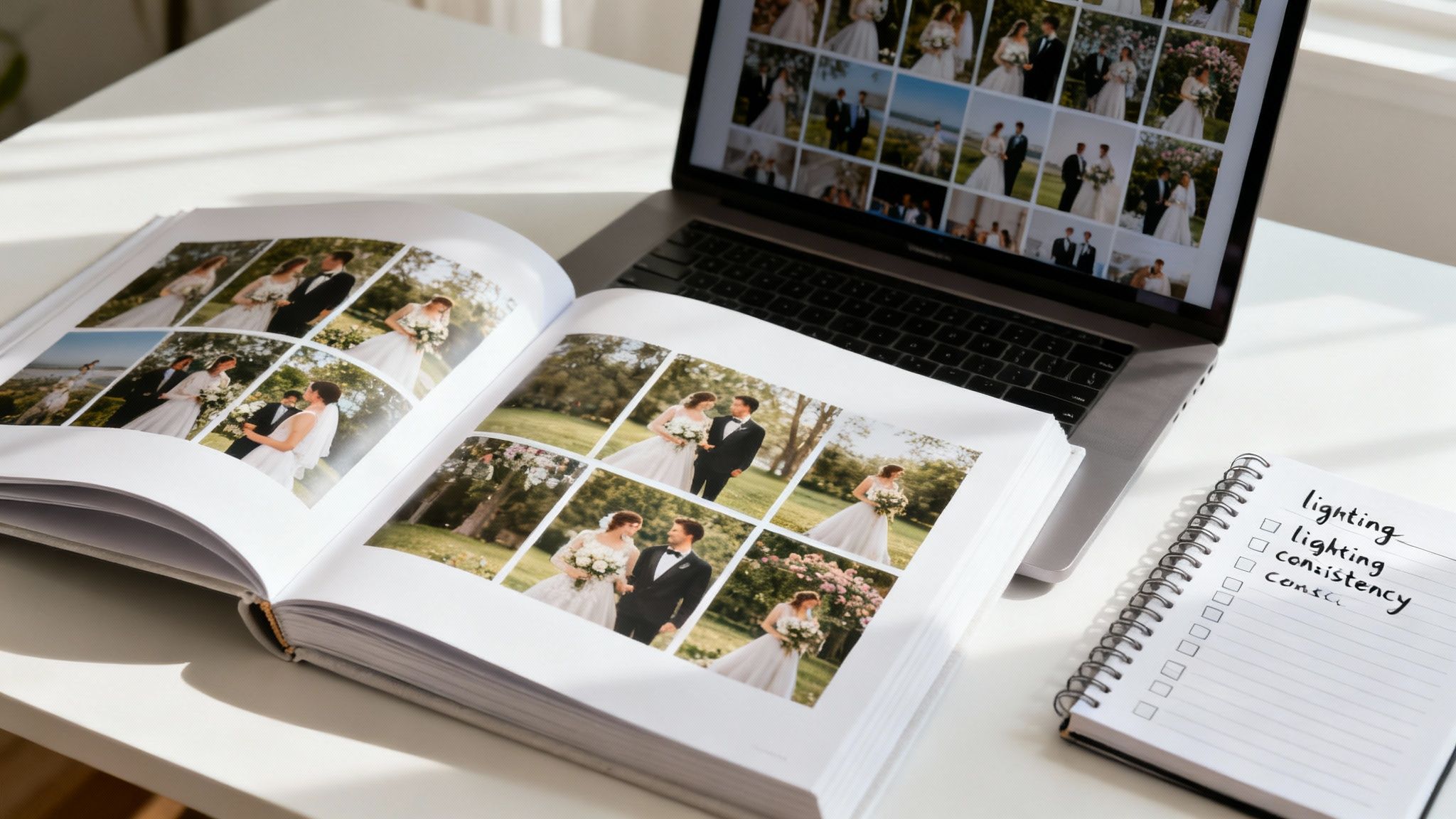
- Consistent Editing: Do the photos at the start of the day match the style of the photos from the reception? The color, tone, and overall vibe should feel cohesive, telling one seamless story.
- Handling Tricky Lighting: This is where the pros really shine. Look for photos taken in tough lighting situations—a dark church, a reception lit only by colorful DJ lights, or harsh midday sun. The images should still look clean, well-exposed, and beautiful.
- Sharp, In-Focus Images: Zoom in on a few photos. Are the couple's eyes sharp and in focus? A little artistic blur is one thing, but the most important moments should be crystal clear.
- Storytelling Flow: Does the gallery actually tell the story of the day? You should see a mix of wide shots that set the scene, medium shots of people interacting, and close-up details of things like the rings, flowers, and emotional expressions.
- Authentic Emotion: Look at the candid shots. Is the photographer capturing real laughter, happy tears, and heartfelt hugs? The ability to anticipate and grab these fleeting moments is what separates a good photographer from a great one.
Evaluating Different Parts of the Wedding Day
A wedding day throws all sorts of lighting and logistical curveballs at a photographer. Break down your analysis by looking at how they handle each part of the day.
Getting Ready Photos
These are often shot in cluttered hotel rooms with weird lighting. Look for clean shots that minimize distractions and find beautiful, soft light for the portraits.
The Ceremony
Ceremonies can be surprisingly dark, and flash is often a no-go. Check if they can capture the big moments—the walk down the aisle, the ring exchange, the first kiss—clearly, without the photos looking grainy or blurry.
Family Portraits
Are the group photos well-organized? Everyone should be visible, in focus, and lit well. A skilled photographer can manage big groups efficiently while keeping everyone looking relaxed and happy, not stiff.
The Reception
This is the ultimate lighting test. Look at their dance floor shots. Do they use flash creatively to capture the energy without making everyone look like deer in headlights? The photos should feel like the party, not like a series of sterile flash-bomb pictures. Our guide on choosing the right style of wedding photography can also help you pinpoint the look you're going for in these galleries.
By really digging into full galleries, you can feel confident that your photographer has the technical chops and artistic eye to capture your entire wedding day beautifully, no matter what happens.
Mastering the Photographer Consultation
You’ve sifted through portfolios, peeked at full galleries, and now you have a shortlist of photographers you love. The next step is my favorite part of the whole process: the consultation.
This isn’t just an interview. Think of it as a vibe check. Whether it’s over a coffee or a video call, this is your chance to see if your personalities click. Remember, you’ll be spending a solid eight hours (or more!) with this person on one of the most significant days of your life. Liking them as a person is just as crucial as loving their photos. You want to feel totally at ease, not awkward or misunderstood.
Getting Ready for a Great Conversation
To get the most out of your meeting, do a little prep work. Have your date, venue, and a rough timeline handy. More importantly, pull up their portfolio again and your notes. Dropping a specific compliment about a shot you loved shows you're serious and have done your homework.
Keep in mind, a great photographer will be interviewing you, too. They’ll want to hear your story, get a feel for your vision, and understand what moments are most important to you. That’s a fantastic sign—it shows they care about telling your story, not just shooting another generic wedding.
Even with tight budgets, this connection matters more than ever. While 85% of couples say inflation has affected their wedding plans, a huge 57% are still prioritizing photography. In a sea of over 267,000 photography businesses in the US, this meeting is where the best ones prove they’re worth it by truly connecting with their clients.
Questions That Tell You Everything
This conversation has to go deeper than just the price tag. You’re trying to understand their entire workflow, from how they act on the wedding day to how they handle unexpected hiccups. You need to leave this chat with zero lingering questions.
A simple way to cover all your bases is by asking about their creative process, their backup plans, and what happens after the wedding.
Don't be shy about asking the tough stuff. A true pro will have ready, confident answers for everything from a camera malfunction to a chaotic family photo session. Their preparedness is a massive clue about their level of experience.
We've put together a table of essential questions to guide your conversation. It breaks down what to ask and, more importantly, why each question matters.
Essential Questions for Your Photographer Consultation
Category
Question to Ask
Why It Matters
Experience & Style
How would you describe your shooting style? Are you more of a director or a fly on the wall?
This ensures their approach matches your desired vibe. If you want candid moments but they love posing, it might not be a good fit.
Venue Familiarity
Have you photographed at our venue before? If not, how do you prepare for a new location?
Experience at your venue is a bonus, but a pro will always scout it beforehand or arrive early to find the best light and spots.
Logistics
What does a typical wedding day timeline look like with you?
This reveals their organizational skills and helps you see how they'll fit into the flow of your day.
Contingency Plans
What’s your backup plan for equipment failure? What if you get sick?
Non-negotiable. They must have backup gear and a network of trusted photographers to cover them in an emergency.
Insurance
Do you have liability insurance?
Most venues require it, and it protects you, them, and your guests. A legitimate business will always be insured.
Deliverables
How many edited images can we expect, and when will we receive our final gallery?
This sets clear expectations and prevents disappointment later. A typical turnaround is 6-12 weeks, but it varies.
Image Rights
What rights do we have to the photos? Do we get high-resolution files?
You need to know if you can print photos on your own or if you have to order through them. Personal printing rights are standard.
Second Shooters
Do you recommend a second photographer for our wedding? Is that included?
For larger weddings or complex logistics, a second shooter is invaluable for capturing more angles and moments.
These questions are your blueprint for a productive and insightful meeting. A photographer who answers these with confidence and enthusiasm is likely a great choice.
By the end of the call, you shouldn't feel uncertain—you should feel genuinely excited. For a complete list of questions to have in your back pocket, take a look at our comprehensive guide on what to ask a wedding photographer before you sign anything.
Getting It in Writing: The Contract and Booking Process
You’ve found them. The photographer whose style makes your heart skip a beat and whose personality just clicks with yours. You’re ready to make it official. This is the exciting part, but it’s also where the details really matter. We’re talking about the contract.
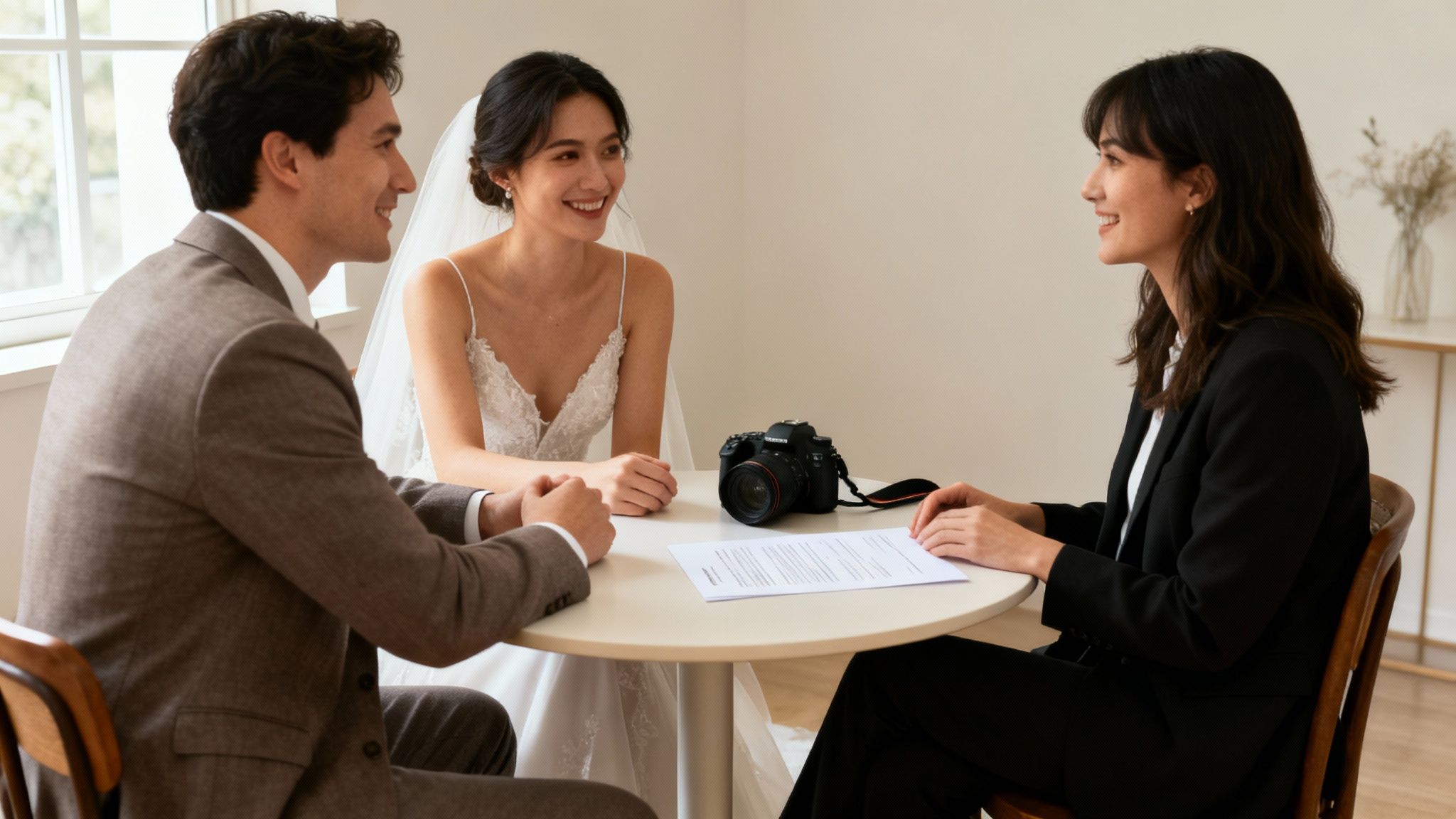
Don't just skim this document. The contract is your roadmap for the entire photography experience. It’s designed to protect both you and your photographer by making sure everyone is on the same page, leaving absolutely no room for "I thought you meant…" moments down the line.
What to Look For in a Photography Contract
A pro's contract will be detailed and thorough. It’s not just a formality; it’s a sign that they're a serious business owner who has seen it all. Before you put pen to paper (or click "sign"), make sure you can find and understand these key pieces of information:
- The Basics: The contract must clearly list your names, the wedding date, and the specific locations for your ceremony and reception. Double-check these for typos!
- Coverage Details: Who is your lead photographer? What time will they start and what time will they finish? These hours should be explicitly stated.
- Payment Schedule: It should break down the total cost, the amount for the non-refundable retainer (or deposit), and the due dates for the remaining balance. No surprises.
- The Deliverables: What are you actually getting? The contract should specify an estimated number of edited images and how they’ll be delivered (e.g., a high-resolution online gallery).
- Delivery Timeline: This is a big one. The contract needs to give you a clear window for when you'll receive your final photos. A typical timeframe is 6-12 weeks after the wedding.
A rock-solid contract is the hallmark of a true professional. It shows they're committed to a transparent process. If a photographer sends over a one-page, vague agreement—or worse, doesn't use one at all—that’s a huge red flag.
Understanding Who Owns the Photos (Image Rights)
This is a section that trips a lot of people up, but it's pretty straightforward. The contract will outline who holds the copyright and how you’re allowed to use the images.
Almost always, the photographer retains the copyright. This is standard industry practice. It means they own the images and can use them for their portfolio, on social media, or in advertisements. You, in turn, are granted personal usage rights. This gives you the freedom to download, print, and share your photos with friends and family for any non-commercial purpose. You can put them on Instagram, make a photo book for your grandma, and print a giant canvas for your living room—you just can't sell them to a magazine.
Finalizing Your Package and Add-Ons
Your contract will list everything included in your chosen package. Now is the last chance to lock in any extras you've been thinking about. Photographers offer all sorts of cool enhancements to tell a more complete story of your day.
Some of the most popular options include:
- Engagement Session: Seriously consider this! It's the perfect, low-pressure way to get comfortable with your photographer and practice being in front of the camera.
- Second Shooter: For weddings with over 100 guests or events happening in multiple locations at once, a second photographer is almost essential to capture everything.
- Wedding Album: There’s nothing like a professionally designed, heirloom-quality album to tell the story of your day. It’s an investment you won't regret.
- Drone Coverage: Want those epic, cinematic shots of your venue? Drone footage can add a spectacular and unique perspective to your wedding gallery.
Make sure any add-ons you want are officially included in the final agreement before you sign. If you’re curious about all the clauses that should be in a solid agreement, our comprehensive wedding photographer contract template is a great resource to see what a professional document looks like.
Once you’ve read through everything, had all your questions answered, and feel totally confident, you’re ready to sign and pay the deposit. Go ahead and do a little happy dance—you can officially check "find a wedding photographer" off your massive to-do list
Common Questions About Hiring a Wedding Photographer
Navigating the world of wedding photography can feel like learning a new language. As you get closer to choosing someone, you'll find that specific questions start popping up. Think of this section as your cheat sheet for the most common things we hear from couples.
Getting these answers will give you the confidence to hire the right person, knowing you've covered all your bases. Let's tackle some of the questions that are probably on your mind.
How Far in Advance Should I Book My Photographer?
This is a big one. Ideally, you want to lock in your photographer 12 to 18 months before your wedding date. I know that sounds like a lifetime away, but the best, most sought-after photographers get snapped up fast.
This is especially true if you’re getting married on a Saturday during peak season (late spring through early fall) in a popular area, like Miami or the Colorado mountains. If you're on a shorter timeline, don't panic! Talented pros often have availability for Friday or Sunday weddings, or during the off-season. It never hurts to ask.
What Is the Difference Between Editing and Retouching?
This is such a great question, and it's crucial for managing expectations. They sound similar, but they're completely different processes.
-
Editing is the standard treatment your entire photo gallery will receive. It’s all about creating a consistent, polished look that defines the photographer's style. This includes adjustments to color, brightness, contrast, and cropping. It’s the magic that makes every photo feel like it belongs in the same beautiful story.
-
Retouching is the detailed, hands-on work, and it's usually an add-on service for specific photos. Think of it as fine-tuning. This is where a photographer might soften skin, remove a stray hair, or even digitally erase a distracting sign from the background of your favorite portrait.
Always ask what's included in your package. You need to know if you're getting standard editing across the board or if detailed retouching for a few key images is part of the deal. This avoids any surprises later.
Should We Hire a Studio That Offers Both Photo and Video?
Booking a team that handles both photography and videography can be a game-changer. One of the biggest wins is having a cohesive visual style across everything. When the photo and video crews come from the same studio—like we do at Candid Studios—their work is meant to look and feel like it belongs together.
The other huge benefit is how well they work together on the day. An established team has a rhythm. They know how to anticipate each other's moves and stay out of each other’s shots without a word. It just makes the day run smoother. Plus, you’ll have one contract, one point of contact, and you'll often find that bundled packages offer a much better value.
What Happens If Our Photographer Has an Emergency?
This is a non-negotiable question to ask in your consultation, and the answer needs to be spelled out in your contract. A true professional will always have a solid backup plan.
This usually involves a network of trusted associate photographers with a similar style and experience level who can step in at a moment's notice. Your contract should clearly state what happens in this worst-case scenario, guaranteeing that a replacement of equal or greater skill will be provided. If a photographer can't give you a clear, contractual answer to this, it's a major red flag.
Do We Really Need a Second Photographer?
A second photographer, or "second shooter," can be incredibly valuable, but it really depends on the size and complexity of your day. For a small, intimate wedding, one great photographer might be all you need.
But you should seriously consider adding a second shooter if:
- Your guest list is over 100-150 people.
- You and your partner are getting ready in separate locations.
- You want to capture both the walk down the aisle and your partner's reaction at the exact same time.
- Your schedule is tight and you want someone to capture candid cocktail hour moments while you're off taking portraits.
A second photographer gives you more angles, more candid shots of your guests, and a priceless layer of security, ensuring nothing gets missed.
At Candid Studios, we believe in total transparency and are here to answer every single question you have. We build our packages around your vision, ensuring your day is captured just the way you imagined it. Explore our wedding photography and videography services today.